
No longer humman (1948)
Mine has been a life of much shame. I can't even guess myself what it must be to live the life of a human being. Portraying himself as a failure, the protagonist of Osamu Dazai's No Longer Human narrates a seemingly normal life even while he feels himself incapable of understanding human beings. Oba Yozo's attempts to reconcile himself to the world around him begin in early childhood, continue through high school, where he becomes a "clown" to mask his alienation, and eventually lead to a failed suicide attempt as an adult. Without sentimentality, he records the casual cruelties of life and its fleeting moments of human connection and tenderness. Semi-autobiographical, No Longer Human is the final completed work of one of Japan's most important writers, Osamu Dazai (1909-1948). The novel has come to "echo the sentiments of youth" (Hiroshi Ando, The Mainichi Daily News) from post-war Japan to the postmodern society of technology. Still one of the ten bestselling books in Japan, No Longer Human is a powerful exploration of an individual's alienation from society.
Genres: literary fiction, classics
Lists: …
Similar books
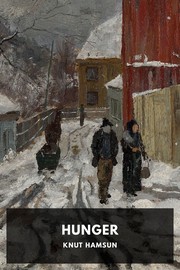
Hunger
Knut Hamsun
2008 · 155 pages · 1 review
 Others: Positive
Hungerby Knut Hamsun is a psychological exploration of desperation, human will, and existential struggle. Through the eyes of the unnamed protagonist, Hamsun paints a stark picture of poverty and isolation in a modernizing city. The protagonist's hunger is both literal and symbolic, representing not only his physical deprivation but also his yearning for meaning and artistic recognition. The novel delves into the complexities of mental instability as the narrator fluctuates between states of delusion, pride, and anguish, revealing the depths of human suffering and resilience. Since its publication, Hunger has been hailed as a pioneering work in modernist literature. Its introspective narrative style and focus on the inner turmoil of the protagonist have influenced many later writers. The novel's existential themes resonate with readers, touching on the alienation and internal conflict faced by individuals in a rapidly changing society. Hamsun's depiction of the psychological effects of extreme hunger and poverty is both poignant and unsettling, offering a raw portrayal of human endurance in the face of societal neglect. The relevance of Hunger persists due to its timeless exploration of human nature. By examining the intersections of pride, despair, and the quest for survival, the novel provides a profound commentary on the fragility of the human condition. Hamsun's work continues to inspire reflection on issues of poverty, mental health, and the search for purpose, making it a powerful contribution to world literature
Why?
What made the match, strongest first
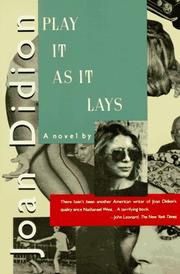
Also classics and literary fiction83%Similar descriptionsPersonalize your recommendations17%Play It as It Lays
Joan Didion
1970 · 214 pages · 2 reviews
 Others: Overwhelmingly positive
Set in a place beyond good and evil---literally in Hollywood, Las Vegas, and the barren wastes of the Mojave Desert, but figuratively in the landscape of an arid soul---it remains more than three decades after its original publication a profoundly disturbing novel, riveting in its exploration of a woman and a society in crisis and stunning in the still-startling intensity of its prose.
Why?
What made the match, strongest first
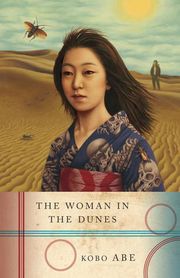
Also classics and literary fiction92%Similar descriptionsPersonalize your recommendations8%The woman in the dunes
Ksobso Abe
1964 · 4 reviews
Others: Overwhelmingly positiveThe Woman in the Dunes, by celebrated writer and thinker Kobo Abe, combines the essence of myth, suspense and the existential novel. After missing the last bus home following a day trip to the seashore, an amateur entomologist is offered lodging for the night at the bottom of a vast sand pit. But when he attempts to leave the next morning, he quickly discovers that the locals have other plans. Held captive with seemingly no chance of escape, he is tasked with shoveling back the ever-advancing sand dunes that threaten to destroy the village. His only companion is an odd young woman, and together their fates become intertwined as they work side by side through this Sisyphean of tasks.
Why?
What made the match, strongest first
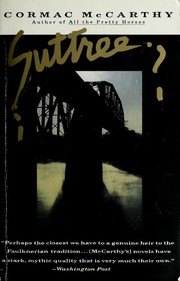
Also classics and literary fiction94%Similar descriptionsPersonalize your recommendations6%Suttree
Cormac McCarthy
1979 · 471 pages · 1 review
Others: PositiveBy the author of Blood Meridian and All the Pretty Horses, Suttree is the story of Cornelius Suttree, who has forsaken a life of privilege with his prominent family to live in a dilapidated houseboat on the Tennessee River near Knoxville. Remaining on the margins of the outcast community there--a brilliantly imagined collection of eccentrics, criminals, and squatters--he rises above the physical and human squalor with detachment, humor, and dignity.
Why?
What made the match, strongest first
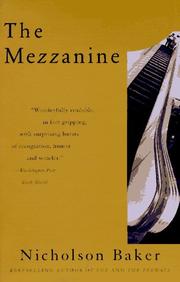
Also classics and literary fiction94%Similar descriptionsPersonalize your recommendations6%The mezzanine
Nicholson Baker
1988 · 135 pages · 4 reviews
Others: PositiveAlthough most of the action of The Mezzanine occurs on the escalator of an office building, where its narrator is returning to work after buying shoelaces, this startlingly inventive and witty novel takes us farther than most fiction written today. It lends to milk cartons the associative richness of Marcel Proust's madeleines. It names the eight most significant advances in a human life —beginning with shoe-tying. It asks whether the hot air blowers in bathrooms really are more sanitary than towels. And it casts a dazzling light on our relations with the objects and people we usually take for granted.
Why?
What made the match, strongest first
Also classics and literary fiction95%Similar descriptionsPersonalize your recommendations5%Things
Georges Perec
1990 · 223 pages · 0 reviews
LF: "Things"? It is a title that intrigues that feeds misunderstanding. Rather than a book about things, basically do you not write a book on happiness? G. P: It is there, I think, between the things of the modern world and happiness, one of obligation. A certain richness of our civilization makes a kind of happiness possible: we can speak, in this sense, as a happiness, deep carpets, from a current figure of happiness which I believe that to be happy, he must be absolutely modern. Those who imagined that I condemned the consumer society really do not understand my book. But this happiness is still possible; because, our capitalist society is: things promised are not things due. --
Why?
What made the match, strongest first
Also classics and literary fiction95%Similar descriptionsPersonalize your recommendations5%