

 Neutral
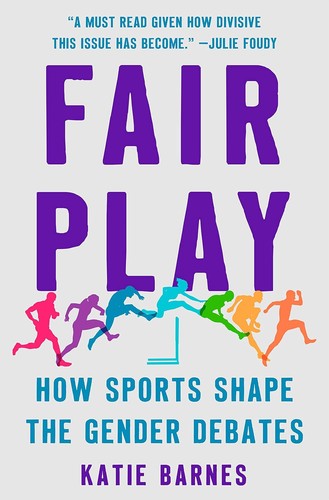
It was a 3.5 3.75. Fair Play by Katie Burns. Happy to have read it. don't need to own it cuz I don't think I would reread it
Review 1 of 2
Others: Neutral A richly reported and provocative look at the history of women’s sports and the controversy surrounding trans athletes by a leading LGBTQ+ sports journalist.For decades women have been playing competitive sports thanks in large part to the protective cover of Title IX. Since passage of that law, the number of women participating in sports and the level of competition in high school, college, and professionally, has risen dramatically. In Fair Play, award-winning journalist Katie Barnes traces the evolution of women’s sports as a pastime and a political arena, where equality and fairness have been fought over for generations. As attitudes toward gender have shifted to embrace more fluidity in recent decades, sex continues to be viewed as a static binary that is easily determined: male or female. It is on that very idea of static sex that we have built an entire sporting apparatus. Now that foundation is crumbling as a result of intense culture wars. Whether we are talking about bathrooms, gender affirming care for trans youth, or sports, the debate about who gets to decide gender is being litigated every day in every community. Many transgender and intersex athletes, from a South African runner, to a New Zealand power lifter, to a wrestler in Texas, to Connecticut track stars, have captured the attention of law and policy makers who want to decide how and when they compete.Women’s sports, since their inception, have been seen as a separate class of competition that requires protection and rules for entry. But what are those rules and who gets to make them? Fair Play looks at all sides of the issue and presents a reasoned and much-needed solution that seeks to preserve opportunities for all going forward.
Genres: nonfiction
Lists: …
Natalie Angier
2006 · 304 pages · 1 review
 Others: Mixed
Award-winning science journalist Angier takes us on a "guided twirligig through the scientific canon." She draws on conversations with hundreds of the world's top scientists, and her own work as a reporter for the New York Times, to create an entertaining guide to scientific literacy--a joyride through the major scientific disciplines: physics, chemistry, biology, geology, and astronomy. It's for anyone who wants to understand the great issues of our time--from stem cells and bird flu to evolution and global warming. It's also one of those rare books that reignites our childhood delight in figuring out how things work: we learn what's actually happening when our ice cream melts or our coffee gets cold, what our liver cells do when we eat a caramel, how the horse shows evolution at work, and that we really are all made of stardust.--From publisher description.
What made the match, strongest first
Susan Freinkel
2011 · 324 pages · 1 review
 Others: Negative
In this probing look at how plastic built the modern world-- and the price the world has paid for plastic-- journalist Freinkel points out that we're nearing a crisis point and gives readers the tools needed through lively anecdotes and analysis. Trekking through history, science, and the global economy, Freinkel assesses the impact of plastic on our lives through eight familiar plastic objects: comb, chair, Frisbee, IV bag, disposable lighter, grocery bag, soda bottle, and credit card.
What made the match, strongest first
Robin Wall Kimmerer
2024 · 128 pages · 5 reviews
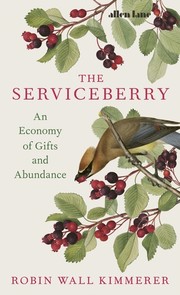
Others: MixedFrom the #1 New York Times bestselling author of Braiding Sweetgrass, a bold and inspiring vision for how to orient our lives around gratitude, reciprocity, and community, based on the lessons of the natural world. As Indigenous scientist and author of Braiding Sweetgrass Robin Wall Kimmerer harvests serviceberries alongside the birds, she considers the ethic of reciprocity that lies at the heart of the gift economy. How, she asks, can we learn from Indigenous wisdom and the plant world to reimagine what we value most? Our economy is rooted in scarcity, competition, and the hoarding of resources, and we have surrendered our values to a system that actively harms what we love. Meanwhile, the serviceberry’s relationship with the natural world is an embodiment of reciprocity, interconnectedness, and gratitude. The tree distributes its wealth—its abundance of sweet, juicy berries—to meet the needs of its natural community. And this distribution ensures its own survival. As Kimmerer explains, “Serviceberries show us another model, one based upon reciprocity, where wealth comes from the quality of your relationships, not from the illusion of self-sufficiency.” As Elizabeth Gilbert writes, Robin Wall Kimmerer is “a great teacher, and her words are a hymn of love to the world.” The Serviceberry is an antidote to the broken relationships and misguided goals of our times, and a reminder that “hoarding won’t save us, all flourishing is mutual.”
What made the match, strongest first
Jenny Odell
2019 · 256 pages · 3 reviews
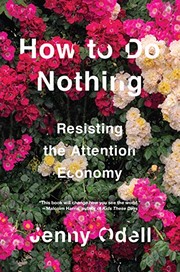
Others: MixedNothing is harder to do these days than nothing. But in a world where our value is determined by our 24/7 data productivity . . . doing nothing may be our most important form of resistance. So argues artist and critic Jenny Odell in this field guide to doing nothing (at least as capitalism defines it). Odell sees our attention as the most precious—and overdrawn—resource we have. Once we can start paying a new kind of attention, she writes, we can undertake bolder forms of political action, reimagine humankind’s role in the environment, and arrive at more meaningful understandings of happiness and progress. Far from the simple anti-technology screed, or the back-to-nature meditation we read so often, How to do Nothing is an action plan for thinking outside of capitalist narratives of efficiency and techno-determinism. Provocative, timely, and utterly persuasive, this book is a four-course meal in the age of Soylent.
What made the match, strongest first
Emily Nagoski
2015 · 448 pages · 2 reviews
 Others: Positive
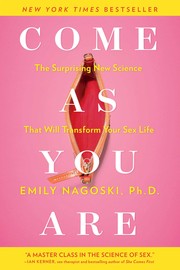
An essential exploration of why and how women’s sexuality works—based on groundbreaking research and brain science—that will radically transform your sex life into one filled with confidence and joy. Researchers have spent the last decade trying to develop a “pink pill” for women to function like Viagra does for men. So where is it? Well, for reasons this book makes crystal clear, that pill will never exist—but as a result of the research that’s gone into it, scientists in the last few years have learned more about how women’s sexuality works than we ever thought possible, and Come as You Are explains it all. The first lesson in this essential, transformative book by Dr. Emily Nagoski is that every woman has her own unique sexuality, like a fingerprint, and that women vary more than men in our anatomy, our sexual response mechanisms, and the way our bodies respond to the sexual world. So we never need to judge ourselves based on others’ experiences. Because women vary, and that’s normal. Second lesson: sex happens in a context. And all the complications of everyday life influence the context surrounding a woman’s arousal, desire, and orgasm. Cutting-edge research across multiple disciplines tells us that the most important factor for women in creating and sustaining a fulfilling sex life, is not what you do in bed or how you do it, but how you feel about it. Which means that stress, mood, trust, and body image are not peripheral factors in a woman’s sexual wellbeing; they are central to it. Once you understand these factors, and how to influence them, you can create for yourself better sex and more profound pleasure than you ever thought possible. And Emily Nagoski can prove it.
What made the match, strongest first
Lois Shearing
2025 · 288 pages · 2 reviews
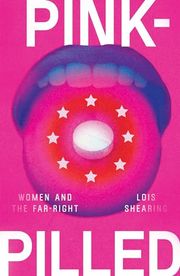
Others: PositiveA daring investigation into how women are recruited by the far right online. As the far right has gained popularity and acceptance around the world, its ranks have swelled with an unlikely category of women. Women play significant roles in far-right movements, acting as propagandists, prizes to be won and mother-warriors of the nation. But up to now their activities have been largely overlooked. In Pink-pilled, journalist Lois Shearing interviews leading experts and infiltrates communities of tradwives and femtrolls to provide a cutting-edge account of how the far right uses the internet to recruit women. Shining a light on women’s experiences within these movements, Shearing reveals horrifying examples of misogyny and violence. Understanding how and why women join movements that explicitly aim to restrict their autonomy is essential if we want to fight back. Pink-pilled offers key insights for countering women’s radicalisation and building communities resistant to far-right thought.
What made the match, strongest first
NeutralIt was a 3.5 3.75. Fair Play by Katie Burns. Happy to have read it. don't need to own it cuz I don't think I would reread it