 Loved it
I've reviewed that biography as well as Michel Syria's very compelling book Dead End. I highly recommend both.
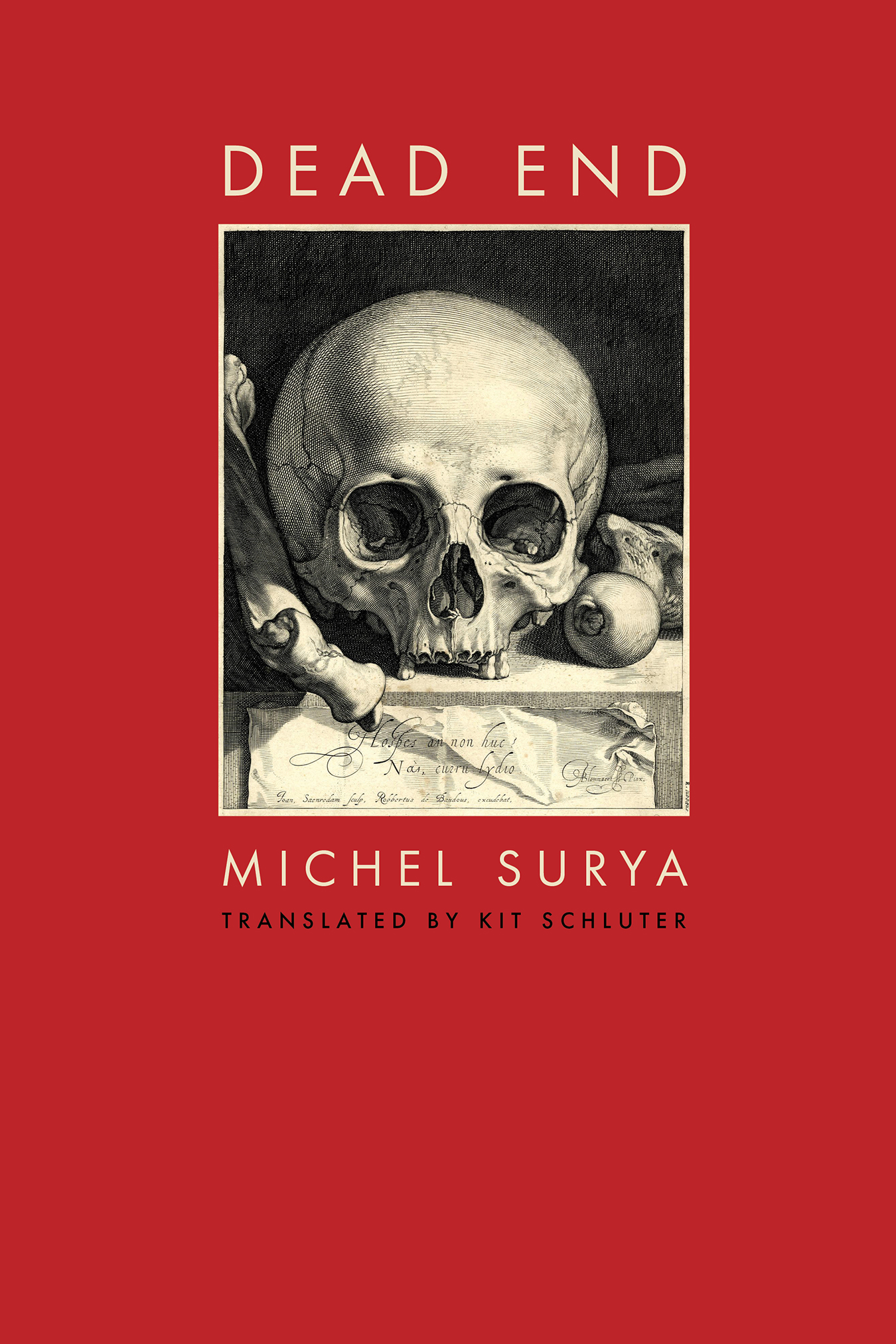
Others: Positive Translated from the French with afterword by Kit Schluter. Foreword by Amandine André. DEAD END is a sinuous pornographic work that forms a part of Michel Surya's series of erotic books released in France over the past four decades. Drafted around 1985, rediscovered among the author's papers in 2004, and revised in 2006, DEAD END speaks with the cerebral starkness of a vanitas painting. Here, the limits of excess themselves are stifling, erotic immoderation no longer satisfies, and worldly anguish reveals itself as ever crueler, more evident. Developing a genre unto itself which might be termed "neurotica," this flood of language--rawer with every unpunctuated breath--affirms and reaffirms the fear that we are beyond salvation. As full of vertiginous bravado and self-loathing as it is of sensual generosity and the genuine search for mutual pleasure, DEAD END's address of the beloved unspools with the devastating, nearly religious force of total confession. This translation by Kit Schluter, featuring a foreword by French poet Amandine André, marks the debut of Surya's fiction in the English language.
Lists: …
Kit Schluter
2024 · 1 review
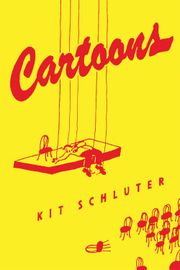
Others: PositiveSet in the uncanny valley between Bugs Bunny and Franz Kafka, Cartoons is an explosive series of outrageous, absurdist tales. A giant cricket with a tiny Kit Schluter in a jar, The Girl Who Is a Piece of Paper, an umbrella who confuses the words "porpoise" and "purpose" in its quest for self-fulfillment – these are just a few denizens of its pages, suffused with a fairy tale-like animism. The stories blur the boundary between microfiction and poet’s prose, featuring impossible transformations and surrealistic events, even as they wrestle with urgent psychic and moral dilemmas. “The true surrealist is unblinking, convulsive, and cheerfully open to the mysterious flow, into their texts, of mythic and archetypal elements operating beyond their conscious control. In Cartoons , Kit Schluter vaults into the zone of Julio Cortazar, Richard Brautigan, and late Giorgio di Chirico, where the reader breaths the air of pure freedom attained rattling inside the chains of self.” —Jonathan Lethem, author of Motherless Brooklyn
What made the match, strongest first
Milan Kundera
1984 · 314 pages · 4 reviews
 Others: Overwhelmingly positive
Interweaves story and dream, past and present, and philosophy and poetry in a sardonic and erotic tale of two couples--Tomas and Teresa, and Sabina and her Swiss lover, Gerhart.
What made the match, strongest first
Maurice Blanchot
1950 · 124 pages · 1 review
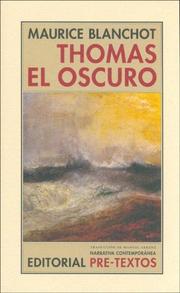
Others: PositiveBefore Sartre, before Beckett, before Robbe-Grillet, Maurice Blanchot created the new novel, the ultimate post-modern fiction. Written between 1932 and 1940, Blanchot's first novel, here brilliantly translated by Robert Lamberton, contains all the remarkable aspects of his famous and perplexing invention, the ontological narrative--a tale whose subject is the nature of being itself. This paradoxical work discovers being in the absence of being, mystery in the absence of mystery, both to be searched for limitlessly. As Blanchot launches this endless search in his own masterful way, he transforms the possibilities of the novel. First issued in English in 1973 in a limited edition, this re-issue includes an illuminating essay on translation by Lamberton.
What made the match, strongest first
Pascal Quignard
2016 · 128 pages · 2 reviews
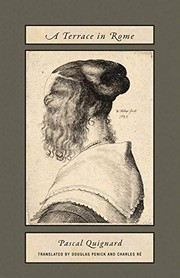
Others: PositiveA Terrace in Rome describes the tormented life of Geoffroy Meaume, a 17th-century engraver of encrypted shadows and erotic prints. After a passionate affair in his youth concludes with his face being burned by acid thrown by his lover's jealous fiancé, Meaume undertakes a lifetime of wandering, his psyche forever engraved by the memory of the woman who spurned him. With a face of boiled leather and a mind haunted by a nightmare of desire, he devotes himself to the black-and-white world of etchings and mezzotints, forsaking the paradise of color to engage in a science of shadows. This fragmented narrative of a man attacked by images is related in 47 short chapters which themselves act as engravings; a tale told by an antiquarian, full of fragmented vision and sexual hell. First published in French in 2000, A Terrace in Rome received the Grand Prix du Roman de l'Académie Française that same year, and went on to be translated into 19 languages. This is its first appearance in English. Pascal Quignard (born 1948) has written over 60 books of fiction, essays, and his own particular genre of philosophical reflection that straddles the personal journal, historical narrative and poetic theory. His books in English include Albucius, All the World's Mornings, The Sexual Night, Sex and Terror, On Wooden Tablets: Apronenia Avitia, and The Salon in Wurttemberg, as well as the multiple volumes of his ongoing book project The Last Kingdom, which, to date, includes The Roving Shadows, The Silent Crossing and Abysses.
What made the match, strongest first
Osamu Dazai
1948 · 177 pages · 2 reviews
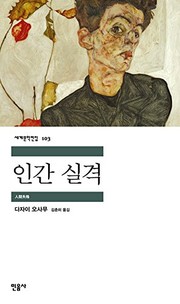
Others: Mostly positiveOsamu Dazai's No Longer Human, this leading postwar Japanese writer's second novel, tells the poignant and fascinating story of a young man who is caught between the breakup of the traditions of a northern Japanese aristocratic family and the impact of Western ideas. In consequence, he feels himself "disqualified from being human" (a literal translation of the Japanese title). Donald Keene, who translated this and Dazai's first novel, The Setting Sun, has said of the author's work: "His world . . . suggests Chekhov or possibly postwar France, . . . but there is a Japanese sensibility in the choice and presentation of the material. A Dazai novel is at once immediately intelligible in Western terms and quite unlike any Western book." His writing is in some ways reminiscent of Rimbaud, while he himself has often been called a forerunner of Yukio Mishima.
What made the match, strongest first
Georges Bataille
1988 · 200 pages · 1 review
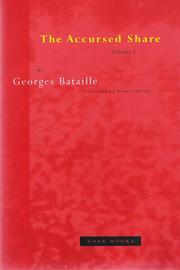
Others: PositiveMost Anglo-American readers know Bataille as a novelist. The "Accursed Share "provides an excellent introduction to Bataille the philosopher. Here he uses his unique economic theory as the basis for an incisive inquiry into the very nature of civilization. Unlike conventional economic models based on notions of scarcity, Bataille's theory develops the concept of excess: a civilization, he argues, reveals its order most clearly in the treatment of its surplus energy. The result is a brilliant blend of ethics, aesthetics, and cultural anthropology that challenges both mainstream economics and ethnology. The three volumes of "The Accursed Share" address what Georges Bataille sees as the paradox of utility: namely, if being useful means serving a further end, then the ultimate end of utility can only be uselessness. The first volume, the only one published before Bataille's death, treated this paradox in economic terms, showing that "it is not necessity but its contrary, luxury, that presents living matter and mankind with their fundamental problems." In the second and third volumes, "The History of Eroticism" and "Sovereignty", Bataille explores the same paradox of utility from an anthropological and an ethical perspective, respectively. "The History of Eroticism" analyzes the fears and fascination, the prohibitions and transgressions attached to the realm of eroticism as so many expressions of the "uselessness" of erotic life. In the third volume, Bataille raises the ethical problems of sovereignty, of "the independence of man relative to useful ends."
What made the match, strongest first
Loved itI've reviewed that biography as well as Michel Syria's very compelling book Dead End. I highly recommend both.