

 Loved it
I just think this work is so interesting and it just reads really well it's such a well structured work
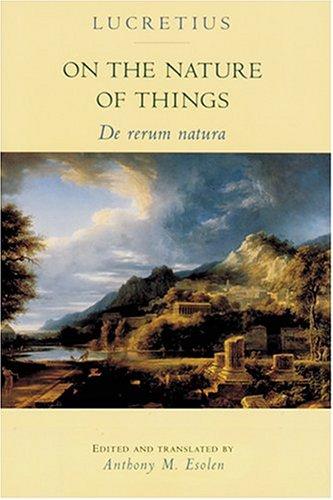
Others: Positive This is regarded as a seminal text of Epicurean science and philosophy. Epicurians discarded both the idea of immortality and the superstitious worship of wilful gods for a life of serene contentment in the available pleasures of nature. Lucretius (c100-c55BC), in elucidating this belief, steers the reader through an extraordinary breadth of subject matter, ranging from the indestructibility of atoms and the discovery of fire to the folly of romantic love and the phenomena of clouds and rainstorms.
Genres: poetry
Lists: …
Pindar
2007 · 240 pages · 1 review
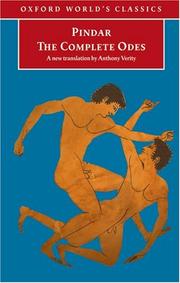
Others: PositiveThe Greek poet Pindar (c. 518-428 BC) composed victory odes for winners in the ancient Games, including the Olympics. He celebrated the victories of athletes competing in foot races, horse races, boxing, wrestling, all-in fighting and the pentathlon, and his Odes are fascinating not only for their poetic qualities, but for what they tell us about the Games. Pindar praises the victor by comparing him to mythical heroes and the gods, but also reminds the athlete of his human limitations. The Odes contain versions of some of the best known Greek myths, such as Jason and the Argonauts, and Perseus and Medusa, and are a valuable source for insights on Greek religion and ethics. Pindar's startling use of language, including striking metaphors, bold syntax, and enigmatic expressions, makes reading his poetry a uniquely rewarding experience. Anthony Verity's lucid translations stay as close as they can to the original Greek, without sacrificing readability. The text is complemented by a succinct introduction by Stephen Instone outlining the essential nature of Pindar's Odes as well as explaining the nature of the Games, the events, and the participants. Explanatory notes help the reader to navigate Pindar's sometimes compressed and allusive expressive technique. About the For over 100 years Oxford World's Classics has made available the broadest spectrum of literature from around the globe. Each affordable volume reflects Oxford's commitment to scholarship, providing the most accurate text plus a wealth of other valuable features, including expert introductions by leading authorities, voluminous notes to clarify the text, up-to-date bibliographies for further study, and much more.
What made the match, strongest first
Hesiod
1953 · 87 pages · 2 reviews
Others: PositiveHesiod's straightforward account of family conflict among the gods is the best and earliest evidence of what the ancient Greeks believed about the beginning of the world. Includes Hesiod's "Works and Days", lines 1-201, and material from the Library of Apollodorus.
What made the match, strongest first
Kate Tempest
2015 · 107 pages · 3 reviews
Others: Positive"My heart throws its head against my ribs, / it's denting every bone it's venting something it has known since I arrived and felt it beat.Kate Tempest, winner of the Ted Hughes Award for Brand New Ancients and widely regarded as the UK's leading spoken word poet, has produced a new poem-sequence of electrifying power. Based on the myth of the blind prophet Tiresias, Hold Your Own is a riveting tale of youth and experience, sex and love, wealth and poverty, community and alienation. Walking in the forest one morning, a young man disturbs two copulating snakes-and is punished by the goddess Hera, who turns him into a woman. This is only the beginning of his journey. Weaving elements of classical myth, autobiography and social commentary, Tempest uses the story of the gender-switching, clairvoyant Tiresias to create four sequences of poems, addressing childhood, manhood, womanhood, and late life. The result is a rhythmically hypnotic tour de force-and a hugely ambitious leap forward for one of the most broadly talented and compelling young writers today"--
What made the match, strongest first
Theocritus
1545 · 143 pages · 2 reviews
Others: Positive"This is a new annotated translation of the Greek poems of Theocritus of Syracuse (first half of the third century B.C.), the inventor of 'bucolic' or 'pastoral' poetry, the principal model for Virgil in the Eclogues, and hence a major figure in the literary traditions which antiquity bequeathed to Western literature. Although it is the pastoral poems for which he is best known, Theocritus' oeuvre also includes hymns to the gods, brilliant mime depictions of everyday life, and encomia of the great, such as Ptolemy Philadelphus. Theocritus is our best witness to the rich variety of poetic forms which flourished in the Hellenistic age."--BOOK JACKET.
What made the match, strongest first
Apollonius of Rhodes
1995 · 216 pages · 1 review
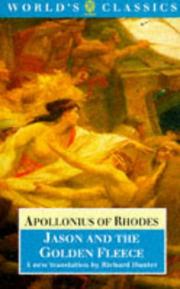
Others: PositiveThis is a new translation of the only extant Greek epic poem to bridge the gap between Homer and late antiquity - a major product of the brilliant world of the Ptolemaic court at Alexandria, written by Apollonius of Rhodes in the third century BC. In telling the dramatic story of Jason's quest for the Golden Fleece and his relations with the dangerous Colchian princess, Medea, Apollonius explores many of the fundamental aspects of life in a highly original way: love, deceit, heroism, man's ignorance of the divine, the limits of science. A major critical re-evaluation of the poem - one of Virgil's primary 'sources' for the Aeneid - is now under way among classicists and scholars in the field of comparative literature. This volume offers the first scholarly translation into English for many years, combining readability with accuracy and an attention to detail that will be helpful to readers both with and without Greek. The explanatory notes and accompanying maps provide all necessary background information to enjoy the poem, while a comprehensive introductory essay sites the poem in its cultural and historical context.
What made the match, strongest first
Ovid
1494 · 198 pages · 2 reviews
Others: PositiveOriginally published Manchester: Carcanet, 2003.
What made the match, strongest first
Loved itI just think this work is so interesting and it just reads really well it's such a well structured work