
 Loved it
there were so many profound lessons in this and I think it opens such a great discussion
 Others: Overwhelmingly positive
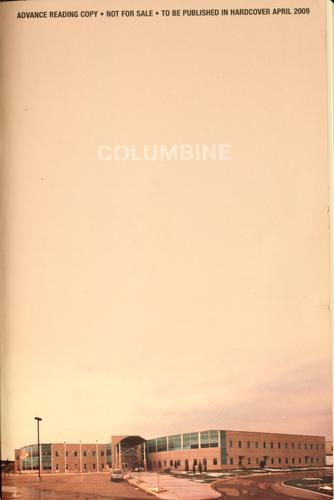
On April 20, 1999, two boys left an indelible stamp on the American psyche. Their goal was simple: to blow up their school, Oklahoma-City style, and to leave "a lasting impression on the world." Their bombs failed, but the ensuing shooting defined a new era of school violence-irrevocably branding every subsequent shooting "another Columbine." When we think of Columbine, we think of the Trench Coat Mafia; we think of Cassie Bernall, the girl we thought professed her faith before she was shot; and we think of the boy pulling himself out of a school window -- the whole world was watching him. Now, in a riveting piece of journalism nearly ten years in the making, comes the story none of us knew. In this revelatory book, Dave Cullen has delivered a profile of teenage killers that goes to the heart of psychopathology. He lays bare the callous brutality of mastermind Eric Harris, and the quavering, suicidal Dylan Klebold, who went to prom three days earlier and obsessed about love in his journal. The result is an astonishing account of two good students with lots of friends, who came to stockpile a basement cache of weapons, to record their raging hatred, and to manipulate every adult who got in their way. They left signs everywhere, described by Cullen with a keen investigative eye and psychological acumen. Drawing on hundreds of interviews, thousands of pages of police files, FBI psychologists, and the boy's tapes and diaries, he gives the first complete account of the Columbine tragedy. In the tradition of HELTER SKELTER and IN COLD BLOOD, COLUMBINE is destined to be a classic. A close-up portrait of hatred, a community rendered helpless, and the police blunders and cover-ups, it is a compelling and utterly human portrait of two killers-an unforgettable cautionary tale for our times.
Genres: nonfiction
Lists: …
David Quammen
2012 · 592 pages · 1 review
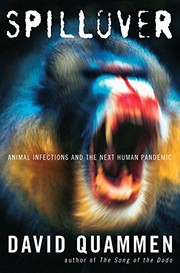
Others: PositiveThis work examines the emergence and causes of new diseases all over the world, describing a process called "spillover" where illness originates in wild animals before being passed to humans and discusses the potential for the next huge pandemic. The emergence of strange new diseases is a frightening problem that seems to be getting worse. In this age of speedy travel, it threatens a worldwide pandemic. We hear news reports of Ebola, SARS, AIDS, and something called Hendra killing horses and people in Australia; but those reports miss the big truth that such phenomena are part of a single pattern. The bugs that transmit these diseases share one thing: they originate in wild animals and pass to humans by a process called spillover. As globalization spreads and as we destroy the ancient ecosystems, penetrating ever deeper into the furthest reaches of the planet, we encounter strange and dangerous infections that originate in animals but can be transmitted to humans. It is reckoned that at least 60% of our infections diseases derive from animals. Diseases that were contained are being set free and the results are potentially catastrophic. The author tracks this subject around the world. He recounts adventures in the field, netting bats in China, trapping monkeys in Bangladesh, stalking gorillas in the Congo, with the world's leading disease scientists. He takes the reader along on this quest to learn how, where from, and why these diseases emerge, and he asks the terrifying question: What might the next big one be?
What made the match, strongest first
Reni Eddo-Lodge
2017 · 272 pages · 4 reviews
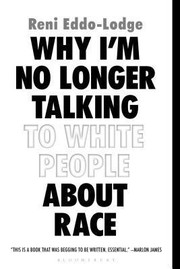
Others: Overwhelmingly positiveIn 2014, award-winning journalist Reni Eddo-Lodge wrote on her blog about her frustration with the way that discussions of race and racism in Britain were being led by those who weren't affected by it. Her words hit a nerve. The post went viral and comments flooded in from others desperate to speak up about their own experiences. Galvanised, she decided to dig into the source of these feelings. Exploring issues from eradicated black history to the inextricable link between class and race, Reni Eddo-Lodge has written a searing, illuminating, absolutely necessary examination of what it is to be a person of colour in Britain today --
What made the match, strongest first
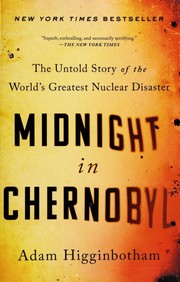
Adam Higginbotham
2019 · 560 pages · 2 reviews
Others: Overwhelmingly positive"Journalist Adam Higginbotham's definitive, years-in-the-making account of the Chernobyl nuclear power plant disaster--and a powerful investigation into how propaganda, secrecy, and myth have obscured the true story of one of the twentieth century's greatest disasters. Early in the morning of April 26, 1986, Reactor Number Four of the Chernobyl Atomic Energy Station exploded, triggering history's worst nuclear disaster. In the thirty years since then, Chernobyl has become lodged in the collective nightmares of the world: shorthand for the spectral horrors of radiation poisoning, for a dangerous technology slipping its leash, for ecological fragility, and for what can happen when a dishonest and careless state endangers its citizens and the entire world. But the real story of the accident, clouded from the beginning by secrecy, propaganda, and misinformation, has long remained in dispute. Drawing on hundreds of hours of interviews conducted over the course of more than ten years, as well as letters, unpublished memoirs, and documents from recently-declassified archives, Adam Higginbotham has written a harrowing and compelling narrative which brings the disaster to life through the eyes of the men and women who witnessed it firsthand. The result is a masterful nonfiction thriller, and the definitive account of an event that changed history: a story that is more complex, more human, and more terrifying than the Soviet myth. Midnight in Chernobyl is an indelible portrait of one of the great disasters of the twentieth century, of human resilience and ingenuity, and the lessons learned when mankind seeks to bend the natural world to his will--lessons which, in the face of climate change and other threats, remain not just vital but necessary"--Publisher's website.
What made the match, strongest first
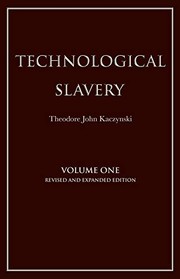
Theodore Kaczynski
2010 · 480 pages · 2 reviews
 Others: Mixed
Theodore J. Kaczynski attended Harvard University, received a PhD in mathematics from the University of Michigan, taught at the University of California, Berkeley, and then moved to Montana where he attempted to live a self-sufficient life. Called a "domestic terrorist" and the "Unabomber" by the FBI, Kaczynski was convicted for illegally mailing bombs, resulting in the deaths of three people and the injury of 23 others. He now serves a life sentence in the supermax prison in Florence, Colorado. The ideas and views expressed by Kaczynski before and after his capture raise crucial issues concerning the evolution and future of our society. For the first time, the reader will have access to an uncensored personal account of his anti-technology philosophy, which goes far beyond Unabomber pop culture mythology. Included is a corrected edition of the "Unabomber Manifesto," and Kaczynski's critique of Anarcho-primitivism, and essays regarding "The Coming Revolution."
What made the match, strongest first
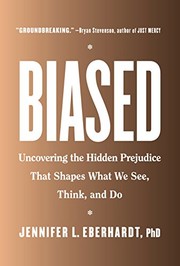
Jennifer L. Eberhardt, PhD
2019 · 368 pages · 3 reviews
Others: PositiveFrom one of the world's leading experts on unconscious racial bias, a personal examination of one of the central controversies and culturally powerful issues of our time, and its influence on contemporary race relations and criminal justice. We do not have to be racist to be biased. With a perspective that is scientific, investigative, and personal, Jennifer L. Eberhardt offers a reasoned look into the effects of implicit racial bias, ranging from the subtle to the dramatic. Racial bias can lead to disparities in education, employment, housing, and the criminal justice system--and then those very disparities further reinforce the problem. In Biased, Eberhardt reveals how even when we are not aware of bias and genuinely wish to treat all people equally, ingrained stereotypes infect our visual perception, attention, memory, and behavior. Eberhardt's extensive work as a consultant to law enforcement, as well as a researcher with unprecedented access to data, including footage from police officers' body-worn cameras, informs every aspect of her book and makes it much more than a work of social psychology. Her research occurs not just in the laboratory but in police departments, courtrooms, prisons, boardrooms, and on the street. Interviews are interwoven with memories and stories from Eberhardt's own life and family. She offers practical suggestions for reform, and takes the reader behind the scenes to police departments implementing her suggestions. Refusing to shy away from the tragic consequences of prejudice, Eberhardt addresses how racial bias is not the fault of, or restricted to, a few "bad apples" in police departments or other institutions. We can see evidence of bias at all levels of society in media, education, and business practices. In Biased, Eberhardt reminds us that racial bias is a human problem--one all people can play a role in solving.
What made the match, strongest first
Alain de Botton
2006 · 288 pages · 1 review
Others: MixedOne of the great but often unmentioned causes of both happiness and misery is the quality of our environment: the kinds of walls, chairs, buildings and streets that surround us.And yet a concern for architecture and design is too often described as frivolous, even self-indulgent. The Architecture of Happiness starts from the idea that where we are heavily influences who we can be, and it argues that it is architecture's task to stand as an eloquent reminder of our full potential.Whereas many architects are wary of openly discussing the word beauty, this book has at its center the large and naive question: What is a beautiful building? It is a tour through the philosophy and psychology of architecture that aims to change the way we think about our homes, our streets and ourselves.From the Hardcover edition. [The inspiration for the TV series: THE PERFECT HOME.]
What made the match, strongest first
Loved itthere were so many profound lessons in this and I think it opens such a great discussion
Loved itDave Cullen researches this book so well and is like one of the authorities on Columbia in my mind he spent the time on this book and I think this is why this is like in my third place because I think to how a really strong