
 Loved it
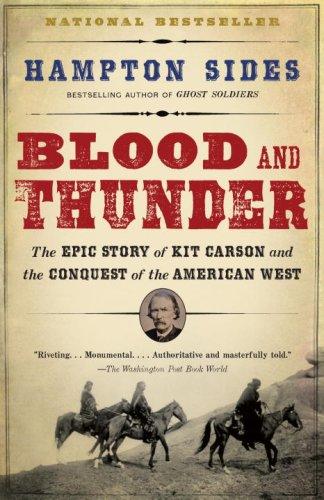
I recently read blood and Thunder by Hampton sides and that was almost as magnificent it would I wish it was on my list as well because that's really made a big impact to me
Others: Positive Praise for Blood and Thunder"Kit Carson's role in the conquest of the Navajo during and after the Civil War remains one of the most dramatic and significant episodes in the history of the American West. Hampton Sides portrays Carson in the larger context of the conquest of the entire West, including his frequent and often lethal encounters with hostile Native Americans. Unusually, Sides gives full voice to Indian leaders themselves about their trials and tribulations in their dealings with the whites. Here is a national hero on the level of Daniel Boone, presented with all of his flaws and virtues, in the context of American people's belief that it was their Manifest Destiny to occupy the entire West."--Howard Lamar, Sterling Professor Emeritus of History, Yale University and editor of The New Encyclopedia of the American West"The story of the American West has seldom been told with such intimacy and immediacy. Legendary figures like Kit Carson leap to life and history moves at a pulse-pounding pace--sweeping the reader along with it. Hampton Sides is a terrific storyteller."--Candice Millard, author of The River of Doubt"Hampton Sides doesn't just write a book, he transports the reader to another time and place. With his keen sense of drama and his crackling writing style, this master storyteller has bequeathed us a majestic history of the Old West."--James Bradley, author of Flags of Our Fathers and Flyboys"Blood and Thunder is a big-hearted book whose subject is as expansive as they come. Hampton Sides tackles it with naked pleasure and narrative cunning: In his telling, the vast saga of America's westward push has a logical center. The dusty town of Santa Fe becomes the nexus around which swirl the fortunes and strategies of a mixed set of serious overachievers, from Kit Carson, the original mountain man, to James K. Polk, the enigmatic president whose achievements, in the dreaded name of Manifest Destiny, were almost biblical in scope. Sides is alive to the exuberance and alert to the tragedy of the taking of the West." --Russell Shorto, author of Island at the Center of the World"For a huge percentage of us immigrant Americans (those whose ancestors arrived after 1492), Hampton Sides fills a gaping hole in our knowledge of American history--a vivid account of how 'The New Men' swept away the thriving civilizations of the Native Americans in their conquest of the West." --Tony HillermanA Magnificent History of How the West Was Really Won--a Sweeping Tale of Shame and GloryIn the fall of 1846 the venerable Navajo warrior Narbona, greatest of his people's chieftains, looked down upon the small town of Santa Fe, the stronghold of the Mexican settlers he had been fighting his whole long life. He had come to see if the rumors were true--if an army of blue-suited soldiers had swept in from the East and utterly defeated his ancestral enemies. As Narbona gazed down on the battlements and cannons of a mighty fort the invaders had built, he realized his foes had been vanquished--but what did the arrival of these "New Men" portend for the Navajo?Narbona could not have known that "The Army of the West," in the midst of the longest march in American military history, was merely the vanguard of an inexorable tide fueled by a self-righteous ideology now known as "Manifest Destiny." For twenty years the Navajo, elusive lords of a huge swath of mountainous desert and pasturelands, would ferociously resist the flood of soldiers and settlers who wished to change their ancient way of life or destroy them.Hampton...
Genres: nonfiction
Lists: …
Patty Krawec
2022 · 1 review
 Others: Mixed
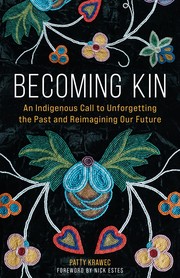
Included in the Lakota People's Law Project Decolonized Reading List for 2025 We find our way forward by going back. The invented history of the Western world is crumbling fast, Anishinaabe writer Patty Krawec says, but we can still honor the bonds between us. Settlers dominated and divided, but Indigenous peoples won't just send them all "home." Weaving her own story with the story of her ancestors and with the broader themes of creation, replacement, and disappearance, Krawec helps readers see settler colonialism through the eyes of an Indigenous writer. Settler colonialism tried to force us into one particular way of living, but the old ways of kinship can help us imagine a different future. Krawec asks, What would it look like to remember that we are all related? How might we become better relatives to the land, to one another, and to Indigenous movements for solidarity? Braiding together historical, scientific, and cultural analysis, Indigenous ways of knowing, and the vivid threads of communal memory, Krawec crafts a stunning, forceful call to "unforget" our history. This remarkable sojourn through Native and settler history, myth, identity, and spirituality helps us retrace our steps and pick up what was lost along the chances to honor rather than violate treaties, to see the land as a relative rather than a resource, and to unravel the history we have been taught.
What made the match, strongest first
Imani Perry
2025 · 256 pages · 2 reviews
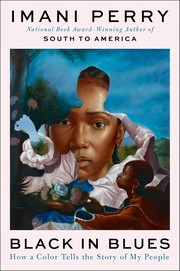
Others: PositiveA surprising and beautiful meditation on the color blue—and its fascinating role in Black history and culture—from National Book Award winner Imani Perry Throughout history, the concept of Blackness has been remarkably intertwined with another color: blue. In daily life, it is evoked in countless ways. Blue skies and blue water offer hope for that which lies beyond the current conditions. But blue is also the color of deep melancholy and heartache, echoing Louis Armstrong’s question, “What did I do to be so Black and blue?” In this book, celebrated author Imani Perry uses the world’s favorite color as a springboard for a riveting emotional, cultural, and spiritual journey—an examination of race and Blackness that transcends politics or ideology. Perry traces both blue and Blackness from their earliest roots to their many embodiments of contemporary culture, drawing deeply from her own life as well as art and history: The dyed indigo cloths of West Africa that were traded for human life in the 16th century. The mixture of awe and aversion in the old-fashioned characterization of dark-skinned people as “Blue Black.” The fundamentally American art form of blues music, sitting at the crossroads of pain and pleasure. The blue flowers Perry plants to honor a loved one gone too soon. Poignant, spellbinding, and utterly original, Black in Blues is a brilliant new work that could only have come from the mind of one of our greatest writers and thinkers. Attuned to the harrowing and the sublime aspects of the human experience, it is every bit as vivid, rich, and striking as blue itself.
What made the match, strongest first
Yuval Noah Harari
2011 · 450 pages · 5 reviews
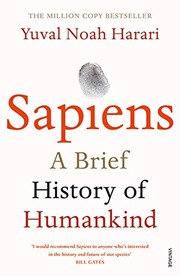
Others: Mostly positiveFrom a renowned historian comes a groundbreaking narrative of humanity’s creation and evolution—a #1 international bestseller—that explores the ways in which biology and history have defined us and enhanced our understanding of what it means to be “human.” One hundred thousand years ago, at least six different species of humans inhabited Earth. Yet today there is only one—homo sapiens. What happened to the others? And what may happen to us? Most books about the history of humanity pursue either a historical or a biological approach, but Dr. Yuval Noah Harari breaks the mold with this highly original book that begins about 70,000 years ago with the appearance of modern cognition. From examining the role evolving humans have played in the global ecosystem to charting the rise of empires, Sapiens integrates history and science to reconsider accepted narratives, connect past developments with contemporary concerns, and examine specific events within the context of larger ideas. Dr. Harari also compels us to look ahead, because over the last few decades humans have begun to bend laws of natural selection that have governed life for the past four billion years. We are acquiring the ability to design not only the world around us, but also ourselves. Where is this leading us, and what do we want to become? Featuring 27 photographs, 6 maps, and 25 illustrations/diagrams, this provocative and insightful work is sure to spark debate and is essential reading for aficionados of Jared Diamond, James Gleick, Matt Ridley, Robert Wright, and Sharon Moalem.
What made the match, strongest first
Rashid Khalidi
2020 · 352 pages · 3 reviews
Others: Leaning positiveA landmark history of one hundred years of war waged against the Palestinians from the foremost US historian of the Middle East, told through pivotal events and family history In 1899, Yusuf Diya al-Khalidi, mayor of Jerusalem, alarmed by the Zionist call to create a Jewish national home in Palestine, wrote a letter aimed at Theodore Herzl: the country had an indigenous people who would not easily accept their own displacement. He warned of the perils ahead, ending his note, “in the name of God, let Palestine be left alone.” Thus Rashid Khalidi, al-Khalidi’s great-great-nephew, begins this sweeping history, the first general account of the conflict told from an explicitly Palestinian perspective. Drawing on a wealth of untapped archival materials and the reports of generations of family members—mayors, judges, scholars, diplomats, and journalists—The Hundred Years' War on Palestine upends accepted interpretations of the conflict, which tend, at best, to describe a tragic clash between two peoples with claims to the same territory. Instead, Khalidi traces a hundred years of colonial war on the Palestinians, waged first by the Zionist movement and then Israel, but backed by Britain and the United States, the great powers of the age. He highlights the key episodes in this colonial campaign, from the 1917 Balfour Declaration to the destruction of Palestine in 1948, from Israel’s 1982 invasion of Lebanon to the endless and futile peace process. Original, authoritative, and important, The Hundred Years' War on Palestine is not a chronicle of victimization, nor does it whitewash the mistakes of Palestinian leaders or deny the emergence of national movements on both sides. In reevaluating the forces arrayed against the Palestinians, it offers an illuminating new view of a conflict that continues to this day.
What made the match, strongest first
Jessica Bennett
2016 · 280 pages · 0 reviews
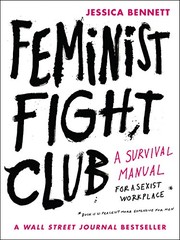
Part manual, part manifesto, a humorous yet incisive guide to navigating subtle sexism at work—a pocketbook Lean In for the Buzzfeed generation that provides real-life career advice and humorous reinforcement for a new generation of professional women. It was a fight club—but without the fighting and without the men. Every month, the women would huddle in a friend’s apartment to share sexist job frustrations and trade tips for how best to tackle them. Once upon a time, you might have called them a consciousness-raising group. But the problems of today’s working world are more subtle, less pronounced, harder to identify—and, if Ellen Pao is any indication, harder to prove—than those of their foremothers. These women weren’t just there to vent. They needed battle tactics. And so the fight club was born. Hard-hitting and entertaining, Feminist Fight Club blends personal stories with research, statistics, infographics, and no-bullsh*t expert advice. Bennett offers a new vocabulary for the sexist workplace archetypes women encounter everyday—such as the Manterrupter who talks over female colleagues in meetings or the Himitator who appropriates their ideas—and provides practical hacks for navigating other gender landmines in today’s working world. With original illustrations, Feminist Mad Libs, a Negotiation Cheat Sheet, as well as fascinating historical research and a kit for “How to Start Your Own Club,” Feminist Fight Club tackles both the external (sexist) and internal (self-sabotaging) behaviors that plague today’s women—as well as the system that perpetuates them.
What made the match, strongest first
Rosan Smits
2026 · 192 pages · 1 review
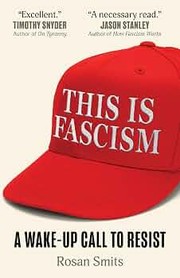
Others: PositiveAn international bestseller, this “excellent” (Timothy Snyder, author of On Tyranny), urgent book outlines how fascism has returned to the mainstream―and how we can stop it Fascism is back. This time no swastikas or concentration camps, but MAGA hats and masked immigration officers. In his second term, Donald Trump is putting together a fascist regime. Not only Trump’s political adversaries say so; his own former advisers do, too. Internationally renowned scholars―experts in the field of fascism―say the evidence is overwhelming: Fascism is on the rise, not just in the US but around the world. Political scientist Rosan Smits topples the strongly held conviction in the West that our established democracies are immune. They are not. Fascism wasn’t just born in the West; it’s where new variants are being incubated. And these modern variants pose a threat not only to our national democracies but the international rules-based order built on law and human rights. The illusion that “it can’t happen here” makes us vulnerable and apathetic, precisely at a moment when action is still possible. Standing up against emerging fascism requires collective action. Nothing is inevitable in politics, and fascism doesn’t stand a chance if enough people understand that an attack on one person’s freedom is an attack on everyone’s freedom. If, in short, enough people understand: This is fascism.
What made the match, strongest first
Loved itI recently read blood and Thunder by Hampton sides and that was almost as magnificent it would I wish it was on my list as well because that's really made a big impact to me