

 Loved it
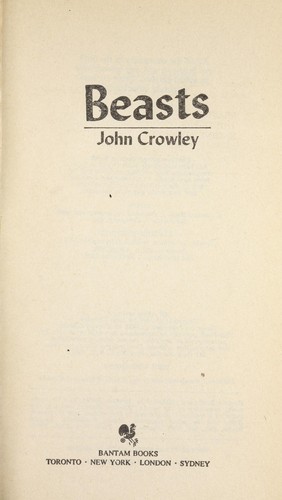
John Crowley's Beasts. Underrated book. If you find a copy of this, get it and read it.
Review 1 of 2
Others: Positive From back cover of Bantam paperback June 1978: Half-human outlaws of a savage future America has been destroyed by civil war. Violent bands of barbarians and anarchists battle agents from the Union for Social Engineering, who plan to seize total control. But they are all united by their fierce hatred of the leos. Every hand s raised against the half-human, hal-animal mutants who roam the desolate frontier. The last, predatory creatures men call Beasts
Genres: science fiction
Lists: …
Ursula K. Le Guin
1966 · 140 pages · 1 review
Others: PositiveThe Earth colony of Landin has been stranded on Werel for ten years—& ten of Werel’s years are over 600 terrestrial years. The lonely & dwindling human settlement is beginning to feel the strain. Every winter—a season that lasts for 15 years—the Earthmen have neighbors: the humanoid hilfs, a nomadic people who only settle down for the cruel cold spell. The hilfs fear the Earthmen, whom they think of as witches & call the farborns. But hilfs & farborns have common enemies: the hordes of ravaging barbarians called gaals & eerie preying snow ghouls. Will they join forces or be annihilated?
What made the match, strongest first
Thomas M. Disch
1970 · 1 review
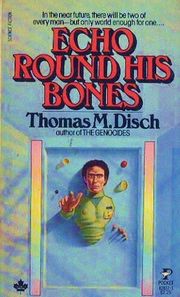
Others: PositiveIn the near future, there will be two of every man--but only world enough for ONE!
What made the match, strongest first
Kate Wilhelm
1977 · 195 pages · 4 reviews
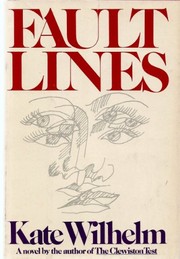
Others: PositiveFrom the back cover of Timescape Books paperback September 1978: Emily Always Knew How to Live. Emily Carmichael was always her own woman -- as the men in her life found out -- from the days when she was an aristocrat's wife in New York high society, through the great events of an era, to the years that bring her to San Francisco, divorced and disillusioned, to take in destitute artists. Now she lies trapped by an earthquake, under the rubble of her California cottage. As she waits to be freed, memories crowd her mind -- of her husband, her son, her lovers. She has reached a crossroads, and for Emily, life will never be the same.
What made the match, strongest first
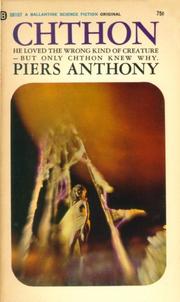
Piers Anthony
1967 · 234 pages · 1 review
Others: PositiveFrom back cover Berkley paperback September 1984: It was a new word for Hell. An escape-proof prison mine, where the worst criminals in the Universe were condemned to perpetual suffering in the ruby darkness. Aton had committed the unpardonable crime. He was condemned to Chthon for loving the minionette, the sensuous siren-spirit no man was allowed to possess... or even desire. And to find out who she was and why she was forbidden, Aton had to do what none before him had ever done. Escape from Chthon!
What made the match, strongest first
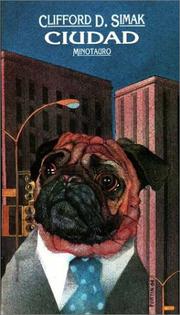
Clifford D. Simak
1952 · 254 pages · 5 reviews
Others: PositiveComment by John Clute: We know better now, of course. But they still entrance us, the old page-turners from the glory days of American SF, half a century or so ago, when the world was full of futures we were never going to have. In the mid-1940s, when he began to publish the episodes that would be assembled as City in 1952, Clifford Simak, a Minneapolis-based journalist and author, could still carry us away with the dream that cars and pollution and even the great cities of the world – "Huddling Place", the title of one of these tales, is his own derisory term for them – would soon be brushed off the map by Progress, leaving nothing behind but tasteful exurbs filled with middle-class nuclear families living the good life, with fishing streams and greenswards sheltering each home from the stormy blast. Fortunately, Simak soon gets past this demented vision of a near-future world saved by technological fixes, a dementia common then to SF writers and gurus and politicians alike, and launches into an astonishingly eventful narrative of the next 10,000 years as seen through the eyes of one family and the immortal robot Jenkins, and all told with a weird pastoral serenity that for a kid like me seemed near to godlike. In its course City touches on almost everything dear to 1940s SF, and to me remembering. Robots. Genetic Engineering. Space. Jupiter. Domed cities. Keeps. Hiveminds. Matter transmission. Telepathy. Parallel worlds. Paranormal empathy. Mutants. Supermen. It's all there, and, thanks to Simak's skilled hand at the wheel, it's all in place: suave, sibylline, swift. The whole is framed as a series of legends told by the uplifted Dogs who have replaced the human race, now gone for ever. They have been bred not to kill. At the end, only Jenkins remains to keep them from learning how to repeat history and die. It all seemed immensely sad and wise then, but fun. It still does.
What made the match, strongest first
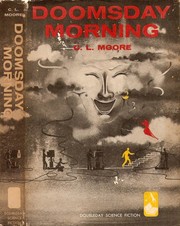
C. L. Moore
1957 · 216 pages · 2 reviews
Others: PositiveLife was just about ideal for Howard Rohan. Nor should this be thought surprising, for he was hailed as the greatest actor in the United States and his wife, Miranda, as the most popular actress. On top of this, Comus (Communications U.S., which of course actually ran the nation) gave him a free hand in his work. But then suddenly life showed itself to be anything but a happy-ending play for Howard: Miranda was faithless to him. In a state of shock, Howard let himself slip to depths of personal dereliction. There seemed every indication this would be his last role, except... Comus was having its difficulties, too--in particular, rebellion in California against its authority. Not only were there outbreaks of violence, but it was not possible to locate the mainsprings of the revolt. In a last-resort move to regain control of affairs, Comus called upon Howard and his still great acting ability. How could an actor in a play learn what Comus, with its vast resources, could not otherwise learn about the forces behind the rebellion?
What made the match, strongest first
Loved itJohn Crowley's Beasts. Underrated book. If you find a copy of this, get it and read it.