 Loved it
It's so good and so compelling. It's so well written, so well researched.
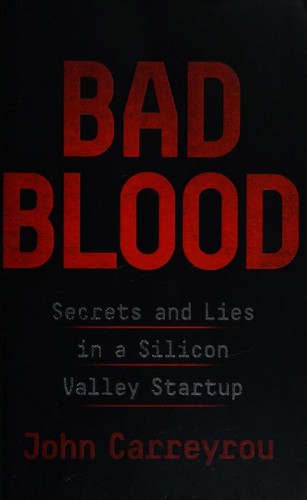
Others: Positive Bad Blood: Secrets and Lies in a Silicon Valley Startup is a nonfiction book by journalist John Carreyrou, released May 21, 2018. It covers the rise and fall of Theranos, the multibillion-dollar biotech startup headed by Elizabeth Holmes. The book received critical acclaim, winning the 2018 Financial Times and McKinsey Business Book of the Year Award.
Genres: nonfiction
Lists: …
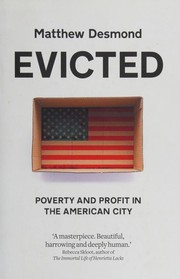
Matthew Desmond
2016 · 442 pages · 5 reviews
 Others: Overwhelmingly positive
Evicted: Poverty and Profit in the American City is a 2016 non-fiction book by American author Matthew Desmond. Set in the poorest areas of Milwaukee, Wisconsin, the book follows eight families struggling to pay rent to their landlords during the financial crisis of 2007–2008. Through a year of ethnographic fieldwork, Desmond's goal in the book is to highlight the issues of extreme poverty, affordable housing, and economic exploitation in the United States. Evicted was well-received and won multiple book awards such as the 2017 Pulitzer Prize for General Nonfiction and the Robert F. Kennedy Book Award. The Pulitzer committee selected the book "for a deeply researched exposé that showed how mass evictions after the 2008 economic crash were less a consequence than a cause of poverty."
What made the match, strongest first
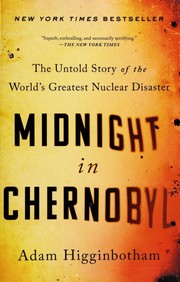
Adam Higginbotham
2019 · 560 pages · 2 reviews
Others: Overwhelmingly positive"Journalist Adam Higginbotham's definitive, years-in-the-making account of the Chernobyl nuclear power plant disaster--and a powerful investigation into how propaganda, secrecy, and myth have obscured the true story of one of the twentieth century's greatest disasters. Early in the morning of April 26, 1986, Reactor Number Four of the Chernobyl Atomic Energy Station exploded, triggering history's worst nuclear disaster. In the thirty years since then, Chernobyl has become lodged in the collective nightmares of the world: shorthand for the spectral horrors of radiation poisoning, for a dangerous technology slipping its leash, for ecological fragility, and for what can happen when a dishonest and careless state endangers its citizens and the entire world. But the real story of the accident, clouded from the beginning by secrecy, propaganda, and misinformation, has long remained in dispute. Drawing on hundreds of hours of interviews conducted over the course of more than ten years, as well as letters, unpublished memoirs, and documents from recently-declassified archives, Adam Higginbotham has written a harrowing and compelling narrative which brings the disaster to life through the eyes of the men and women who witnessed it firsthand. The result is a masterful nonfiction thriller, and the definitive account of an event that changed history: a story that is more complex, more human, and more terrifying than the Soviet myth. Midnight in Chernobyl is an indelible portrait of one of the great disasters of the twentieth century, of human resilience and ingenuity, and the lessons learned when mankind seeks to bend the natural world to his will--lessons which, in the face of climate change and other threats, remain not just vital but necessary"--Publisher's website.
What made the match, strongest first
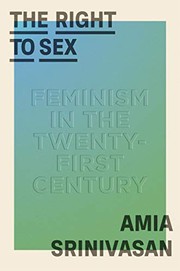
Amia Srinivasan
2019 · 304 pages · 2 reviews
Others: Positive"A work of nonfiction by philosopher Amia Srinivasan that upends the way we discuss-or avoid discussing-the problems and politics of sex"--
What made the match, strongest first
Roxane Gay
2014 · 310 pages · 5 reviews
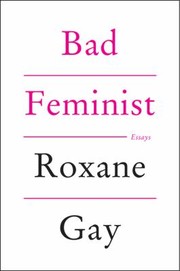
Others: Overwhelmingly positive319 pages ; 23 cm
What made the match, strongest first
Carol Anderson
2016 · 256 pages · 1 review
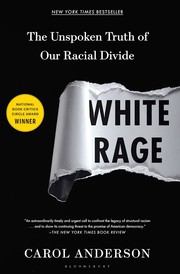
Others: PositiveWhite Rage: The Unspoken Truth of Our Racial Divide is a 2016 nonfiction book by Emory University professor Carol Anderson. Anderson was contracted to write the book following the reaction to an op-ed she wrote for The Washington Post in 2014. White Rage became a New York Times Best Seller, and was listed as a notable book of 2016 by The New York Times, The Washington Post, The Boston Globe, and the Chicago Review of Books. White Rage was also listed by The New York Times as an Editors' Choice, and won the 2016 National Book Critics Circle Award for Criticism.
What made the match, strongest first
Amanda Ripley
2021 · 368 pages · 1 review
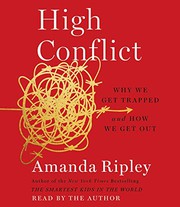
Others: PositiveA “compulsively readable” (Evan Osnos, National Book Award–winning author) book from the New York Times bestselling author of The Unthinkable and award-winning journalist Amanda Ripley investigating how good people get captured by high conflict—and how they break free.When we are baffled by the insanity of the “other side”—in our politics, at work, or at home—it’s because we aren’t seeing how the conflict itself has taken over. That’s what “high conflict” does. High conflict is what happens when discord distills into a good-versus-evil kind of feud, the kind with an us and a them. In this state, the brain behaves differently. We feel increasingly certain of our own superiority, and everything we do to try to end the conflict, usually makes it worse. Eventually, we can start to mimic the behavior of our adversaries, harming what we hold most dear. Our journey spans California, Chicago, Colombia, New York, and beyond, following people caught in political feuds, gang vendettas, and deep ideological divides as they confront the stories fueling their conflicts and seek a path forward. All these people, in dramatically different situations, were drawn into high conflict by similar forces, including conflict entrepreneurs, humiliation, and false binaries. But ultimately, all of them found ways to transform high conflict into good conflict, the kind that made them better people. They rehumanized and recategorized their opponents, and they revived curiosity and wonder, even as they continued to fight for what they knew was right. People do escape high conflict. Individuals—even entire communities—can short-circuit the feedback loops of outrage and blame, if they want to. “Insightful and enthralling” (The New York Times Book Review) High Conflict provides a mind-opening new way to think about conflict that will transform how we move through the world.
What made the match, strongest first
Loved itIt's so good and so compelling. It's so well written, so well researched.