


 Loved it
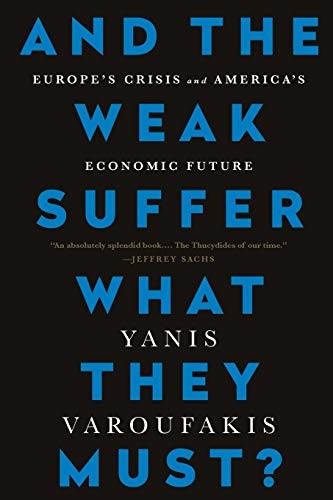
my first book by him was and the weak suffer what they must Europe's crisis America's economic future where in brilliant man he actually explains the 2008 economic crisis
Others: Positive ""The strong do as they can and the weak suffer what they must." --Thucydides The fate of the global economy hangs in the balance, and Europe is doing its utmost to undermine it, to destabilize America, and to spawn new forms of authoritarianism. Europe has dragged the world into hideous morasses twice in the last one hundred years... it can do it again. Yanis Varoufakis, the former Finance Minister of Greece, shows here that the Eurozone is a house of cards destined to fall without a radical change in direction. And, if the European Union falls apart, he argues, the global economy will not be far behind. Once America abandoned Europe in 1971 from the dollar zone, Europe's leaders decided to create a monetary union of 18 nations without control of their own money, without democratic accountability, and without a government to support the Central Bank. This bizarre economic super-power was equipped with none of the shock absorbers necessary to contain a financial crisis, while its design ensured that, when it came, the crisis would be massive. When disaster hit in 2009, Varoufakis argues that Europe turned against itself, humiliating millions of innocent citizens, driving populations to despair, and buttressing a form of bigotry unseen since the Second World War. Here, Varoufakis offers concrete policies that the rest of the world can take part in to intervene and help save Europe from impending catastrophe, and presents the ultimate case against austerity. With passionate, informative, and at times humorous prose, he warns that the implosion of an admittedly crisis-ridden and deeply irrational European capitalism should be avoided at all cost"--
Lists: …
Yanis Varoufakis
2017 · 217 pages · 2 reviews
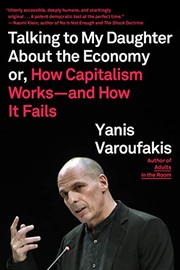
Others: PositiveIn Talking to My Daughter About the Economy, activist Yanis Varoufakis, Greece's former finance minister and the author of the international bestseller Adults in the Room, pens a series of letters to his young daughter, educating her about the business, politics, and corruption of world economics. Yanis Varoufakis has appeared before heads of nations, assemblies of experts, and countless students around the world. Now, he faces his most important and difficult audience yet. Using clear language and vivid examples, Varoufakis offers a series of letters to his young daughter about the economy: how it operates, where it came from, how it benefits some while impoverishing others. Taking bankers and politicians to task, he explains the historical origins of inequality among and within nations, questions the pervasive notion that everything has its price, and shows why economic instability is a chronic risk. Finally, he discusses the inability of market-driven policies to address the rapidly declining health of the planet his daughters generation stands to inherit. Throughout, Varoufakis wears his expertise lightly. He writes as a parent whose aim is to instruct his daughter on the fundamental questions of our age and through that knowledge, to equip her against the failures and obfuscations of our current system and point the way toward a more democratic alternative.
What made the match, strongest first
Sven Lindqvist
1996 · 179 pages · 2 reviews
Others: Positive"Exterminate All the Brutes" is a unique study of Europe's dark history in Africa, written in the form of a travel diary and a historical examination of European racism over the past two centuries. Like Edward Said's Orientalism, Lindqvist's book examines the history of European racism, setting Conrad's Heart of Darkness in context and tracing the legacy of the writings of European explorers and theologians, politicians and historians, from the late eighteenth century on, in an effort to help us understand that most terrifying of Conrad's lines, "Exterminate all the brutes." Lindqvist argues that the harrowing racism that led to the Holocaust in the twentieth century had its roots in European colonial policy of the preceding century. This is an argument that was made in Hannah Arendt's celebrated Origins of Totalitarianism, but Lindqvist approaches it differently, with the insights of an artist and biographer. "Exterminate All the Brutes" raises questions uniquely appropriate to the current American debate on the depth and costs of racism today.
What made the match, strongest first
Tayeb Salih
1969 · 169 pages · 2 reviews
 Others: Overwhelmingly positive
After years of study in Europe, the young narrator returns to his village along the Nile in the Sudan. It is the 1960s, and he is eager to make a contribution to the new postcolonial life of his country. Back home, he discovers a stranger among the familiar faces of childhood--the enigmatic Mustafa Sa'eed. Mustafa takes the young man into his confidence, telling him the story of his own years in London, of his brilliant career as an economist, and of the series of fraught and deadly relationships with European women that led to a terrible public reckoning and his return to his native land.
What made the match, strongest first
Matthew Desmond
2016 · 442 pages · 5 reviews
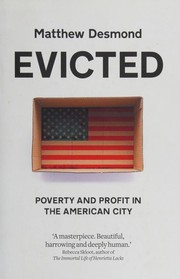
Others: Overwhelmingly positiveEvicted: Poverty and Profit in the American City is a 2016 non-fiction book by American author Matthew Desmond. Set in the poorest areas of Milwaukee, Wisconsin, the book follows eight families struggling to pay rent to their landlords during the financial crisis of 2007–2008. Through a year of ethnographic fieldwork, Desmond's goal in the book is to highlight the issues of extreme poverty, affordable housing, and economic exploitation in the United States. Evicted was well-received and won multiple book awards such as the 2017 Pulitzer Prize for General Nonfiction and the Robert F. Kennedy Book Award. The Pulitzer committee selected the book "for a deeply researched exposé that showed how mass evictions after the 2008 economic crash were less a consequence than a cause of poverty."
What made the match, strongest first
Mike Davis
2006 · 256 pages · 1 review
Others: PositiveMike Davis charts the expected global urbanization explosion over the next 30 years and points out that outside China most of the rest of the world's urban growth will be without industrialization or development, rather a 'peverse' urban boom in spite of stagnant or negative urban economic growth.
What made the match, strongest first
Thomas Piketty
1997 · 151 pages · 2 reviews
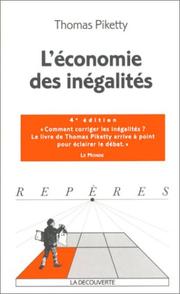
Others: Positive"Thomas Piketty wrote The Economics of Inequality as an introduction to the conceptual and factual background necessary for interpreting changes in economic inequality over time. Piketty begins by explaining how inequality evolves and how economists measure it. In subsequent chapters, he explores variances in income and ownership of capital and the variety of policies used to reduce these gaps. Along the way, with characteristic clarity and precision, he introduces key ideas about the relationship between labor and capital, the effects of different systems of taxation, the distinction between 'historical' and 'political' time, the impact of education and technological change, the nature of capital markets, the role of unions, and apparent tensions between the pursuit of efficiency and the pursuit of fairness" -- provided by publisher.
What made the match, strongest first
Loved itmy first book by him was and the weak suffer what they must Europe's crisis America's economic future where in brilliant man he actually explains the 2008 economic crisis