Loved
I haven't read through all of it we only had to read a few sections for class but I will definitely be returning to this
Review 1 of 4
 Creators: Liked
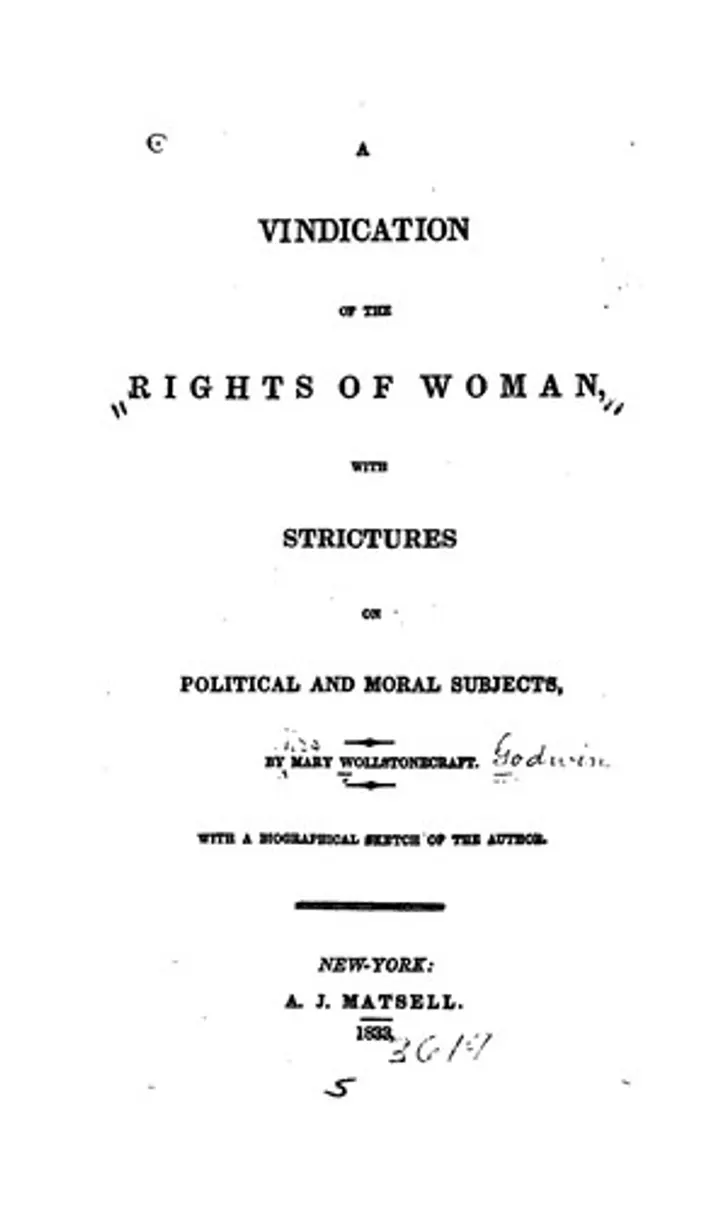
In an era of revolutions demanding greater liberties for mankind, Mary Wollstonecraft (1759–1797) was an ardent feminist who spoke eloquently for countless women of her time. Having witnessed firsthand the devastating results of male improvidence, she assumed an independent role early in life, educating herself and eventually earning a living as a governess, teacher and writer. She was also an esteemed member of the radical intellectual circle that included William Godwin (father of her daughter, novelist Mary Godwin Shelley, and later her husband), Thomas Paine, William Blake, Henry Fuseli and others. First published in 1792, A Vindication of the Rights of Woman created a scandal in its day, largely, perhaps, because of the unconventional lifestyle of its creator. Today, it is considered the first great manifesto of women’s rights, arguing passionately for the education of women: "Tyrants and sensualists are in the right when they endeavor to keep women in the dark, because the former want only slaves, and the later a plaything." No narrow-minded zealot, Wollstonecraft balanced passionate advocacy with a sympathetic warmth — a characteristic that helped her ideas achieve widespread influence. Anyone interested in the history of the women’s rights movement will welcome this inexpensive edition of one of the landmark documents in the struggle for human dignity, freedom and equality.
LovedI haven't read through all of it we only had to read a few sections for class but I will definitely be returning to this
LovedI've just recently actually reread this and was just reminded of the genius of Mary Austin Craft and if you haven't read it again I would recommend it
Likeda vindication of the rights of woman i remember studying that at uni and i just really liked what i read basically
LovedWe also have the OG piece of feminist writing and that is A Vindication of the Rights of Woman by Mary Wollstonecraft. Wollstonecraft was such a pioneer, such a feminist icon.
What made the match, strongest first
Liked by creators50 reviews