
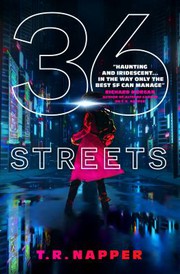
So, it's it's like it's violent, there's drugs, there's there's crime, there's there's like inequality, there's cool technology, but it's sort of like really infused with just like a like an alive world to do with the local culture, martial arts, and as well as some more sort of like relevant techno- technological and social issues that are relevant to today. So, it's like a fresh take on classic cyberpunk. So, I love 36 Streets, I loved The Eschaton

10 Recommendations for Current Sci-Fi and Fantasy Authors
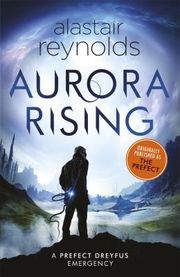
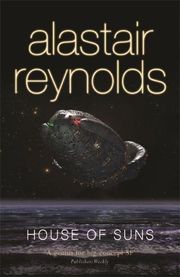
So, something that came a little bit later like Aurora Rising or House of Suns might be a better place to start for someone that still wants the big epic sci-fi stuff, but with a little bit more polished writing and characters.
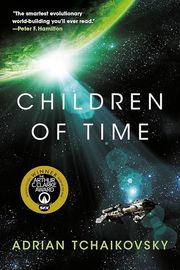
Yeah, I'm a I'm a Tchaikovsky fan, especially Children of Time.
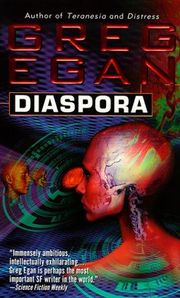
I probably wouldn't recommend starting with Diaspora. I found Diaspora a little hard to understand to get into even though I liked it.
I've liked all the books, maybe some more than others, but everything has something that's like "Wow, that opened my mind or was a new experience or it's just like a very cool way to think about science and the world."
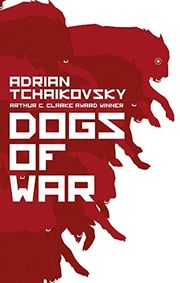
And my second favorite is probably Dogs of War.
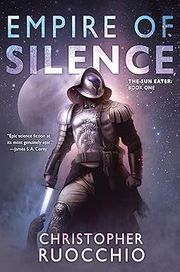
I'm actually a little higher on the first book than some people. I think a lot of people like, "Oh, you just got to get to book two." Like, what? I had a really good time with book one.
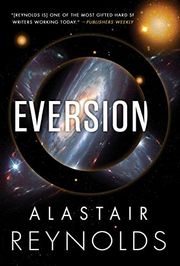
And you know what? He's still writing, putting out great stuff cuz a version was a pretty recent release that I loved.
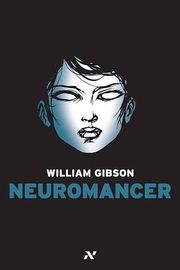
And I think some of the classics that I do really enjoy like Neuromancer or maybe by William Gibson or maybe Hardwired by Walter Jon Williams, they're not the easiest books to get into. They don't hold your hand with the world building. it's so they can be quite complex with the language.
House of Suns might be my favorite book of all time. If I If I was stuck on a desert island and could bring one sci-fi book, it just might be House of Suns. Cuz it has one of the best premises ever for a sci-fi book.
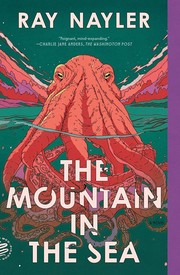
And it leans a little bit towards hard sci-fi, but I think it's very readable and it dives into some really interesting concepts to do with intelligence and consciousness and maybe some of the similarities and differences in those between artificial intelligence, human intelligence, and octopus intelligence.
And I think some of the classics that I do really enjoy like Neuromancer or maybe by William Gibson or maybe Hardwired by Walter Jon Williams, they're not the easiest books to get into. They don't hold your hand with the world building. it's so they can be quite complex with the language.
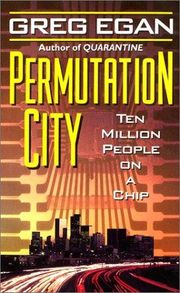
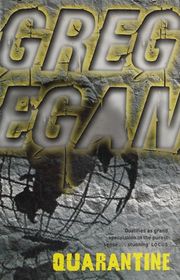
Permutation City is one of my favorite books of all time. It's kind of cyberpunk, but a little bit more cyber than punk. Near future, a man is trying to create immortality through a digital universe.
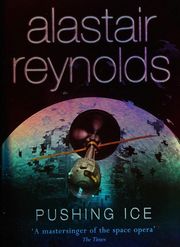
So, there's a lot of great standalones that he's written, Aversion, Pushing Ice.
I've liked all the books, maybe some more than others, but everything has something that's like "Wow, that opened my mind or was a new experience or it's just like a very cool way to think about science and the world."
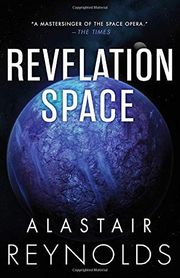
I think if you're a sci-fi person, I would maybe start with Revelation Space because the writing is just a little bit dry. That like he was a debut author, not quite as character-focused. A lot of the characters are a bit unlikable.
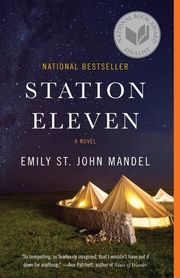
I love both of them, especially Station Eleven.
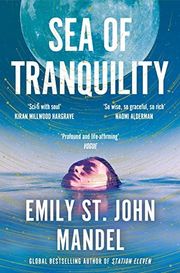
I love both of them, especially Station Eleven. I really connected to this one. It is definitely softer sci-fi, more philosophical science fiction, but I just connected so deeply to the ideas and the themes, and I was just getting so emotional reading that book.
So, I love 36 Streets, I loved The Eschaton
And I did like some of the characters, but the thing about that book, I believe it was like a novella, which she then turned into a novel, and so it feels a bit disjointed. It kind of feels like two loosely connected stories, and it didn't fully work for me.
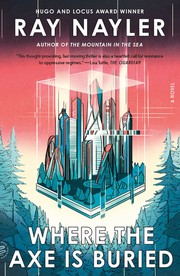
Where the Axe is Buried I really liked as well. It's kind of a little bit dystopian, a little bit of a political thriller, but also some of the similarities in terms of his approach to science and society and those themes.