
SciFiScavenger 14.1K subscribers · Nov 11, 2026

Why Ursula Le Guin’s Hainish Cycle Is So Extraordinary (it's not what you think!)

Reviews8

Liked

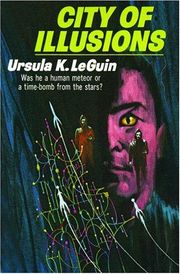
And Falk, the protagonist, has lost his memory and must discover who he is amongst the people whose world is now unfamiliar to him. As I say, these are adventure stories and they can be read as such, but they also introduce recurring concerns that Le Guin is drawn to repeatedly, outsiders, assimilation, misunderstandings and the dangers that go with them, and perhaps most importantly, the way that contact between societies changes both sides.

Loved
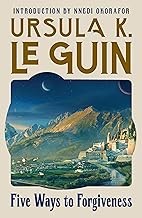
By the later stories, especially those collected in Five Ways to Forgiveness, the ecumen feels like a genuine political and cultural entity. Its members are trying to deal with society shaped by slavery and by religious repression and corporate power. They don't always agree about what to do.

Liked

As I say, these are adventure stories and they can be read as such, but they also introduce recurring concerns that Le Guin is drawn to repeatedly, outsiders, assimilation, misunderstandings and the dangers that go with them, and perhaps most importantly, the way that contact between societies changes both sides.

Liked

Rocannon's World is in many ways a conventional science fiction adventure story, though Rocannon himself must try to remain an aloof observer. In fact, Rocannon wears an impermeable suit, a protective garment that keeps him physically insulated from his surroundings, a neat metaphor for the weaknesses of the prime directive mode.

Loved

With The Left Hand of Darkness, the Hainish universe begins to feel much more substantial. Gethen is no longer simply a strange planet with a few unusual customs. Its climate, its religion, its political divisions, and its social relationships all shape the story.

Loved

In the telling, the final entry from 2000, a Terran named Sutty visits the planet Aka, where an authoritarian corporation has suppressed an older storytelling culture. Sutty's task here is to understand the traditions that survive and the people who are trying to preserve them. It's a fitting culmination of many of the cycle's concerns.

Liked

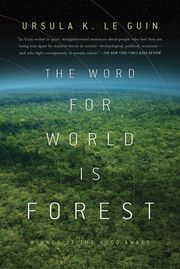
This novella is a major development of the treatment of cultural contact in the Hainish cycle. Earth, or Terra more properly, has established an exploitative colony on Athshe, enslaving the native population and destroying its environment in the name of profit. The story explores how technological superiority becomes a self-fulfilling justification for exploitation.