
 Loved it
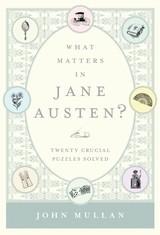
my favorite nonfiction book is what matters in jane austen by john mullen so i love this book a lot it is quite similar to the artful dickens in many ways
Review 1 of 3
Others: Positive Which important Austen characters never speak? Is there any sex in Austen? What do the characters call one another, and why? What are the right and wrong ways to propose marriage? In What Matters in Jane Austen?, John Mullan shows that we can best appreciate Austen's brilliance by looking at the intriguing quirks and intricacies of her fiction. Asking and answering some very specific questions about what goes on in her novels, he reveals the inner workings of their greatness. In twenty short chapters, each of which explores a question prompted by Austens novels, Mullan illuminates the themes that matter most in her beloved fiction. Readers will discover when Austen's characters had their meals and what shops they went to; how vicars got good livings; and how wealth was inherited. What Matters in Jane Austen? illuminates the rituals and conventions of her fictional world in order to reveal her technical virtuosity and daring as a novelist. It uses telling passages from Austen's letters and details from her own life to explain episodes in her novels: readers will find out, for example, what novels she read, how much money she had to live on, and what she saw at the theater. Written with flair and based on a lifetime's study, What Matters in Jane Austen? will allow readers to appreciate Jane Austen's work in greater depth than ever before. - Publisher.
Lists: …
Lucy Worsley
2017 · 387 pages · 6 reviews
 Others: Overwhelmingly positive
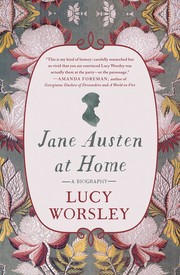
""Jane Austen at Home offers a fascinating look at Jane Austen's world through the lens of the homes in which she lived and worked throughout her life. The result is a refreshingly unique perspective on Austen and her work and a beautifully nuanced exploration of gender, creativity, and domesticity." - Amanda Foreman, bestselling author of Georgianna, Duchess of Devonshire. On the eve of the two hundredth anniversary of Jane Austen's death, take a trip back to her world and the many places she lived as historian Lucy Worsley visits Austen's childhood home, her schools, her holiday accommodations, the houses - both grand and small - of the relations upon whom she was dependent, and the home she shared with her mother and sister towards the end of her life. In places like Steventon Parsonage, Godmersham Park, Chawton House and a small rented house in Winchester, Worsley discovers a Jane Austen very different from the one who famously lived a 'life without incident'. Worsley examines the rooms, spaces and possessions which mattered to her, and the varying ways in which homes are used in her novels as both places of pleasure and as prisons. She shows readers a passionate Jane Austen who fought for her freedom, a woman who had at least five marriage prospects, but - in the end - a woman who refused to settle for anything less than Mr. Darcy. Illustrated with two sections of color plates, Lucy Worsley's Jane Austen at Home is a richly entertaining and illuminating new book about one of the world's favorite novelists and one of the subjects she returned to over and over in her unforgettable novels: home"--|cProvided by publisher.
What made the match, strongest first
Jane Austen
1815 · 454 pages · 13 reviews
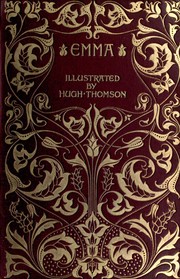
Others: Overwhelmingly positiveEmma, by Jane Austen, is a novel about youthful hubris and the perils of misconstrued romance. The novel was first published in December 1815. As in her other novels, Austen explores the concerns and difficulties of genteel women living in Georgian-Regency England; she also creates a lively comedy of manners among her characters. Before she began the novel, Austen wrote, "I am going to take a heroine whom no one but myself will much like." In the very first sentence she introduces the title character as "Emma Woodhouse, handsome, clever, and rich." Emma, however, is also rather spoiled, headstrong, and self-satisfied; she greatly overestimates her own matchmaking abilities; she is blind to the dangers of meddling in other people's lives; and her imagination and perceptions often lead her astray.
What made the match, strongest first
Diana Peterfreund
2012 · 2 reviews
 Others: Mixed
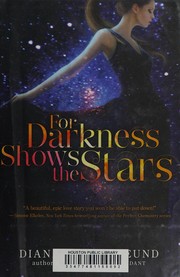
"Elliot North fights to save her family's land and her own heart in this post-apocalyptic reimaging of Jane Austen's PERSUASION"--
Rebecca Romney
2025 · 464 pages · 7 reviews
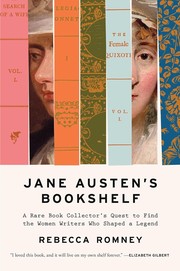
Others: Overwhelmingly positiveFrom rare book dealer and guest star of the hit show Pawn Stars, a page-turning literary adventure that introduces readers to the women writers who inspired Jane Austen—and investigates why their books have disappeared from our shelves.Long before she was a rare book dealer, Rebecca Romney was a devoted reader of Jane Austen. She loved that Austen’s books took the lives of women seriously, explored relationships with wit and confidence, and always, allowed for the possibility of a happy ending. She read and reread them, often wishing Austen wrote just one more. But Austen wasn’t a lone genius. She wrote at a time of great experimentation for women writers—and clues about those women, and the exceptional books they wrote, are sprinkled like breadcrumbs throughout Austen’s work. Every character in Northanger Abbey who isn’t a boor sings the praises of Ann Radcliffe. The play that causes such a stir in Mansfield Park is a real one by the playwright Elizabeth Inchbald. In fact, the phrase “pride and prejudice” came from Frances Burney’s second novel Cecilia. The women that populated Jane Austen’s bookshelf profoundly influenced her work; Austen looked up to them, passionately discussed their books with her friends, and used an appreciation of their books as a litmus test for whether someone had good taste. So where had these women gone? Why hadn’t Romney—despite her training—ever read them? Or, in some cases, even heard of them? And why were they no longer embraced as part of the wider literary canon? Jane Austen’s Bookshelf investigates the disappearance of Austen’s heroes—women writers who were erased from the Western canon—to reveal who they were, what they meant to Austen, and how they were forgotten. Each chapter profiles a different writer including Frances Burney, Ann Radcliffe, Charlotte Lennox, Charlotte Smith, Hannah More, Elizabeth Inchbald, Hester Lynch Thrale Piozzi, and Maria Edgeworth—and recounts Romney’s experience reading them, finding rare copies of their works, and drawing on connections between their words and Austen’s. Romney collects the once-famed works of these forgotten writers, physically recreating Austen’s bookshelf and making a convincing case for why these books should be placed back on the to-be-read pile of all book lovers today. Jane Austen’s Bookshelf will encourage you to look beyond assigned reading lists, question who decides what belongs there, and build your very own collection of favorite novels.
What made the match, strongest first
Jane Austen
1813 · 346 pages · 19 reviews
Others: Mostly positivePride and Prejudice is an 1813 novel of manners written by Jane Austen. The novel follows the character development of Elizabeth Bennet, the dynamic protagonist of the book who learns about the repercussions of hasty judgments and comes to appreciate the difference between superficial goodness and actual goodness. Mr. Bennet, owner of the Longbourn estate in Hertfordshire, has five daughters, but his property is entailed and can only be passed to a male heir. His wife also lacks an inheritance, so his family faces becoming very poor upon his death. Thus, it is imperative that at least one of the girls marry well to support the others, which is a motivation that drives the plot.
What made the match, strongest first
Rory Muir
2019 · 384 pages · 1 review
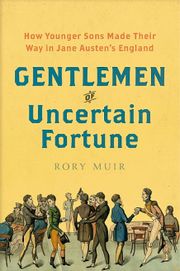
Others: PositiveA portrait of Jane Austen's England told through the career paths of younger sons-men of good family but small fortune. In Regency England the eldest son usually inherited almost everything while his younger brothers, left with little inheritance, had to make a crucial decision: what should they do to make an independent living? Rory Muir weaves together the stories of many obscure and well-known young men, shedding light on an overlooked aspect of Regency society. This is the first scholarly yet accessible exploration of the lifestyle and prospects of these younger sons.
What made the match, strongest first
Loved itmy favorite nonfiction book is what matters in jane austen by john mullen so i love this book a lot it is quite similar to the artful dickens in many ways