Similar books
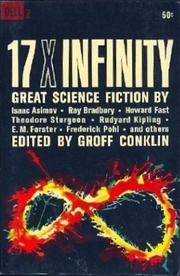
17 X infinity
Groff Conklin
1963 · 272 pages · 2 reviews
 Others: Mixed
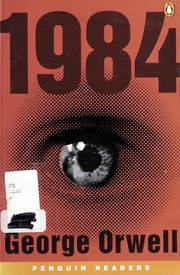
1984 (adaptation)
Michael Dean
2003 · 37 pages · 7 reviews
 Others: Mostly positive
Winston Smith lives in a society where the government controls people every second of the day. He fights this world with love. But it's dangerous: love for another person can be punished by death - and Big Brother is always watching. Orwell's classic story shows that there is no freedom unless ideas and beliefs can be questioned. This is as true today as when it was written, more than fifty years ago. --back cover
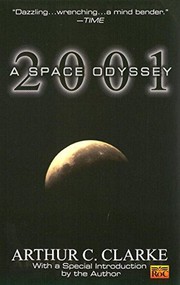
2001: A Space Odyssey
Arthur C. Clarke
1968 · 228 pages · 5 reviews
 Others: Overwhelmingly positive
A novel that proposes an idea about how the human race might have begun and where it might be headed...given a little help from out there. A colaboration of ideas with director Stanley Kubrick in the late 1960's it begins at "the dawn of man" and then leaps to the year 2001 where a mission to Saturn (Jupiter in the film) is mounted to try and answer questions raised by the discovery of an ancient artifact dug up on the moon. Though not particularly fast paced, the science is good, and there are a few hair raising events. There are also interesting speculations about the future, such as the space shuttle, and a device eerily similar to an iPad. Leaving plenty of room for contemplation and the appreciation for the inevitable trials of space travel, this is one of the truly landmark pieces of hard science fiction.
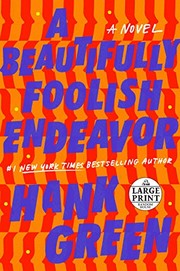
A Beautifully Foolish Endeavor
Hank Green
2020 · 320 pages · 8 reviews
Others: Mostly positiveA Beginning at the End
Mike Chen
2020 · 392 pages · 1 review
Others: MixedA Canticle for Leibowitz
Walter M. Miller Jr.
1959 · 320 pages · 4 reviews
Others: MixedHighly unusual After the Holocaust novel. In the far future, 20th century texts are preserved in a monastery, as "sacred books". The monks preserve for centuries what little science there is, and have saved the science texts and blueprints from destruction many times, also making beautifully illuminated copies. As the story opens to a world run on a basically fuedal lines, science is again becoming fashionable, as a hobby of rich men, at perhaps 18th or early 19th century level of comprehesion. A local lord, interested in science, comes to the monastery. What happens after that is an exquisitely told tale, stunning and extremely moving, totally different from any other After the Holocaust story