
 Loved it
all of the information in here is just so fabulously interesting and the organization is just chef's kiss so good just not edible
Review 1 of 2
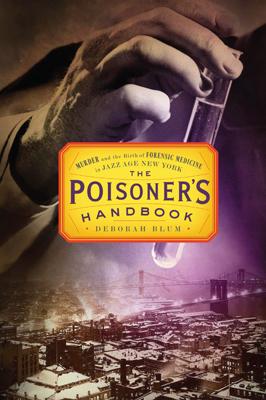
Others: Positive The untold story of how poison rocked Jazz Age New York City. A pair of forensic scientists began their trailblazing chemical detective work, fighting to end an era when untraceable poisons offered an easy path to the perfect crime. Chief medical examiner Charles Norris and toxicologist Alexander Gettler investigate a family mysteriously stricken bald, factory workers with crumbling bones, a diner serving poisoned pies, and many others. Each case presents a deadly new puzzle and Norris and Gettler create revolutionary experiments to tease out even the wiliest compounds from human tissue. From the vantage of their laboratory it also becomes clear that murderers aren't the only toxic threat--modern life has created a kind of poison playground, and danger lurks around every corner.
Lists: …
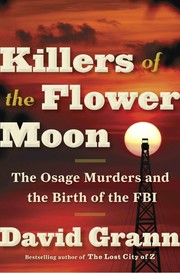
David Grann
2017 · 345 pages · 1 review
Others: PositiveIn the 1920s, the richest people per capita in the world were members of the Osage Nation in Oklahoma. After oil was discovered beneath their land, the Osage rode in chauffeured automobiles, built mansions, and sent their children to study in Europe. Then, one by one, the Osage began to be killed off. The family of an Osage woman, Mollie Burkhart, became a prime target. One of her relatives was shot. Another was poisoned. And it was just the beginning, as more and more Osage were dying under mysterious circumstances, and many of those who dared to investigate the killings were themselves murdered. As the death toll rose, the newly created FBI took up the case, and the young director, J. Edgar Hoover, turned to a former Texas Ranger named Tom White to try to unravel the mystery. White put together an undercover team, including a Native American agent who infiltrated the region, and together with the Osage began to expose one of the most chilling conspiracies in American history.
What made the match, strongest first
Stephen Witt
2015 · 304 pages · 3 reviews
Others: PositiveThis book is a riveting story of obsession, music, crime, and money, featuring visionaries and criminals, moguls and tech-savvy teenagers. It's about the greatest pirate in history, the most powerful executive in the music business, a revolutionary invention and an illegal website four times the size of the iTunes Music Store. Journalist Stephen Witt traces the secret history of digital music piracy, from the German audio engineers who invented the mp3, to a North Carolina compact-disc manufacturing plant where factory worker Dell Glover leaked nearly two thousand albums over the course of a decade, to the high-rises of midtown Manhattan where music executive Doug Morris cornered the global market on rap, and, finally, into the darkest recesses of the Internet. Through these interwoven narratives, Witt has written a thrilling book that depicts the moment in history when ordinary life became forever entwined with the world online -- when, suddenly, all the music ever recorded was available for free. Witt introduces the unforgettable characters -- inventors, executives, factory workers, and smugglers -- who revolutionized an entire artform, and reveals for the first time the secret underworld of media pirates that transformed our digital lives. - Publisher.
What made the match, strongest first
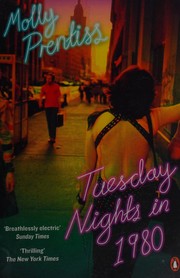
Molly Prentiss
2016 · 297 pages · 2 reviews
Others: PositiveWelcome to SoHo at the onset of the eighties: a gritty, not-yet-gentrified playground for artists and writers looking to make it in the big city. Among them: James Bennett, a synesthetic art critic for The New York Times whose unlikely condition enables him to describe art in profound, magical ways, and Raul Engales, an exiled Argentinian painter running from his past and the Dirty War that has enveloped his country. As the two men ascend in the downtown arts scene, dual tragedies strike, and each is faced with a loss that acutely affects his relationship to life and to art. It is not until they are inadvertently brought together by Lucy Olliason-- a small town beauty and Raul's muse-- and a young orphan boy sent mysteriously from Buenos Aires, that James and Raul are able to rediscover some semblance of what they've lost.
What made the match, strongest first
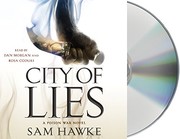
Sam Hawke
2018 · 560 pages · 3 reviews
 Others: Overwhelmingly negative
"Outwardly, Jovan is the lifelong friend of the Chancellors charming, irresponsible Heir. Quiet. Forgettable. In secret, he's a master of poisons and chemicals, trained to protect the Chancellors family from treachery. When the Chancellor succumbs to an unknown poison and an army lays siege to the city, Jovan and his sister Kalina must protect the Heir and save their city-state. But treachery lurks in every corner, and the ancient spirits of the land are rising ... and angry"--Amazon.com.
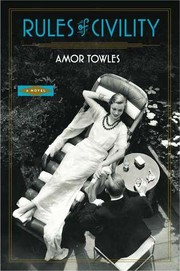
Amor Towles
2011 · 352 pages · 2 reviews
Others: PositiveA chance encounter with a handsome banker in a jazz bar on New Year's Eve 1938 catapults Wall Street secretary Katey Kontent into the upper echelons of New York society, where she befriends a shy multi-millionaire, an Upper East Side ne'er-do-well, and a single-minded widow.
What made the match, strongest first
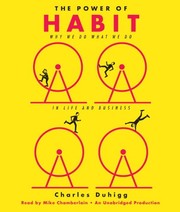
Charles Duhigg
2012 · 371 pages · 2 reviews
Others: PositiveA young woman walks into a laboratory. Over the past two years, she has transformed almost every aspect of her life. She has quit smoking, run a marathon, and been promoted at work. The patterns inside her brain, neurologists discover, have fundamentally changed. Marketers at Procter & Gamble study videos of people making their beds. They are desperately trying to figure out how to sell a new product called Febreze, on track to be one of the biggest flops in company history. Suddenly, one of them detects a nearly imperceptible pattern -- and with a slight shift in advertising, Febreze goes on to earn a billion dollars a year. An untested CEO takes over one of the largest companies in America. His first order of business is attacking a single pattern among his employees -- how they approach worker safety -- and soon the firm, Alcoa, becomes the top performer in the Dow Jones. What do all these people have in common? They achieved success by focusing on the patterns that shape every aspect of our lives. They succeeded by transforming habits. In The Power of Habit, award-winning New York Times business reporter Charles Duhigg takes us to the thrilling edge of scientific discoveries that explain why habits exist and how they can be changed. With penetrating intelligence and an ability to distill vast amounts of information into engrossing narratives, Duhigg brings to life a whole new understanding of human nature and its potential for transformation. Along the way we learn why some people and companies struggle to change, despite years of trying, while others seem to remake themselves overnight. We visit laboratories where neuroscientists explore how habits work and where, exactly, they reside in our brains. We discover how the right habits were crucial to the success of Olympic swimmer Michael Phelps, Starbucks CEO Howard Schultz, and civil-rights hero Martin Luther King, Jr. We go inside Procter & Gamble, Target superstores, Rick Warrens Saddleback Church, NFL locker rooms, and the nations largest hospitals and see how implementing so-called keystone habits can earn billions and mean the difference between failure and success, life and death. At its core, The Power of Habit contains an exhilarating argument: The key to exercising regularly, losing weight, raising exceptional children, becoming more productive, building revolutionary companies and social movements, and achieving success is understanding how habits work. Habits arent destiny. As Charles Duhigg shows, by harnessing this new science, we can transform our businesses, our communities, and our lives. - Publisher.
What made the match, strongest first
Loved itall of the information in here is just so fabulously interesting and the organization is just chef's kiss so good just not edible