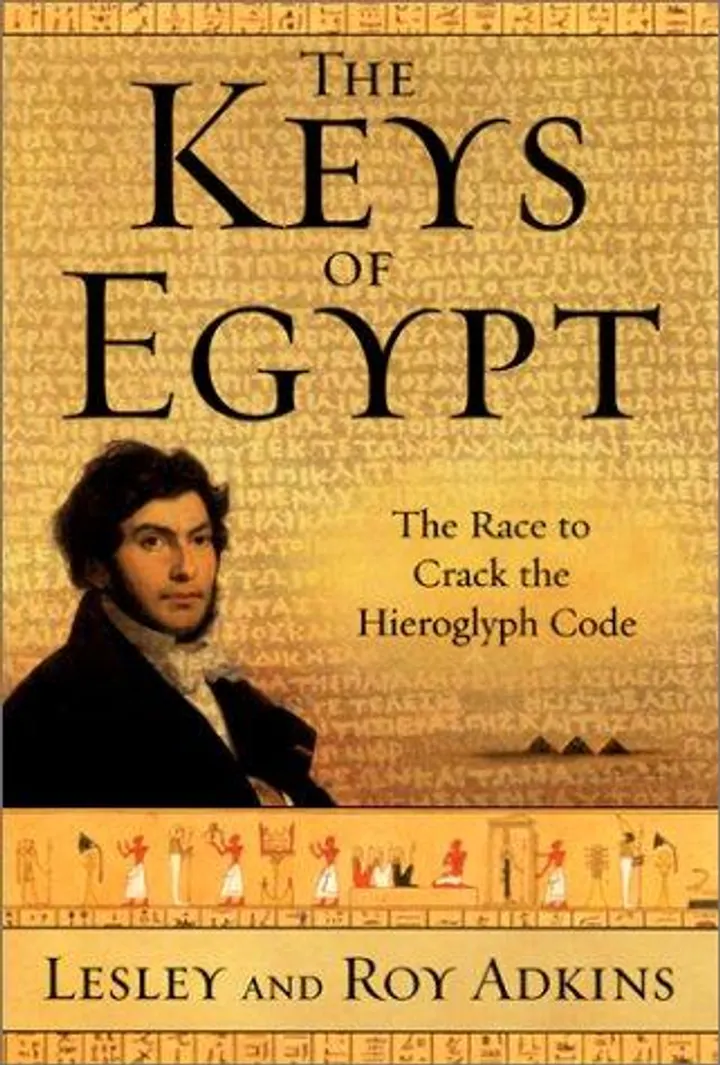

The Keys of Egypt
The Keys of EgyptLesley Adkins

The Keys of Egypt (2000)

Lesley Adkins

Series unknown

Creators: Liked

"When Napoleon invaded Egypt in 1798, his troops and scientists were astonished to discover ancient temples, tombs, and statues, all covered with strange markings - the last remnants of a language lost in time. After the Rosetta Stone was uncovered, hope was raised that the mystery of this ancient writing could be solved. Egyptomania spread throughout Europe, and the quest to decipher the hieroglyphs began in earnest, for it was understood that fame and fortune awaited the scholar who succeeded." "The Keys of Egypt is the fascinating true story of the race to decipher Egyptian hieroglyphs and of the rediscovery of the world of ancient Egypt - a world that had been closed to the West for centuries."--Jacket.

ISBN:
9780060953492
Length:
352 pages

Lists: …

Reviews1

Similar books

John H. McWhorterMost of our assumptions about language are wrong. Language is not pure. Language is not only words. Language is not divided into real languages and "dialects". Language is not what we write on a page. So what, then, is a language? John McWhorter asks us to do a simple thing: to look at language the way a linguist does. And once we make that leap, we see a whole new world of human communication, celebrating everything from ancient Persian to the Navajo language to "baby mama". What Language Is argues that any language, left untouched, becomes more ingrown over time. Only adults attempting to learn a language (and constructively butchering it) can strip it down. Diving into the astounding complexities of Navajo, McWhorter outlines how a language can become downright disheveled, with more exceptions than rules. Looking at an African language called Twi, McWhorter elucidates how even tongues that sound primitive to the untrained ear enfold immense intricacies, and how what sounds like "improper" language actually constitute new and exciting grammar. McWhorter then examines the difference between written and oral language, and explains that, to a linguist, the notion that the written word is somehow elevated over the spoken in downright bizarre, especially because only two hundred of the world's six thousand languages are written. McWhorter also looks at the way languages cross-pollinate each other and occasionally become entirely new creatures via the example of Saramaccan, a wonderful languages that combines African languages with English, Dutch, and Portuguese.

Why?

What made the match, strongest first

  • Mixed reactions from creators1 review
  • On the same reading list100%