
 Loved it
excellent lamb is two for two with me now I loved Solaris and I love the futurological Congress
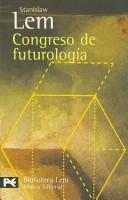
Others: Positive The futurologists of the world have gathered at their Eighth World Congress at the Costa Rica Hilton to discuss the problem of overpopulation. Their deliberations, however, are interrupted by a revolution which the government attempts to quell with chemical weapons. The air and water are laden with "benignimizers" and other exotic drags which send futurologist Tichy careening into a hallucinatory tomorrow. Lem's view of the overcrowded future is original and disturbing. A pessimistic, mordantly funny book, well translated from the Polish by Michael Kandel -- Kirkus Review.
Genres: science fiction
Lists: …
Stanisław Lem
1961 · 220 pages · 13 reviews
 Others: Overwhelmingly positive
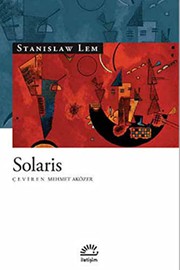
The cult-classic by Stanislaw Lem that spawned the movie is now available for your Kindle! Until now the only English edition was a 1970 version, which was translated from French and which Lem himself described as a "poor translation." This wonderful new English translation (by Bill Johnston) of Lem's classic Solaris is a must-have for fans of Lem's classic novel. Telling of humanity's encounter with an alien intelligence on the planet Solaris, the 1961 novel is a cult classic, exploring the ultimate futility of attempting to communicate with extra-terrestrial life. When Kris Kelvin arrives at the planet Solaris to study the ocean that covers its surface, he finds a painful, hitherto unconscious memory embodied in the living physical likeness of a long-dead lover. Others examining the planet, Kelvin learns, are plagued with their own repressed and newly corporeal memories. The Solaris ocean may be a massive brain that creates these incarnate memories, though its purpose in doing so is unknown, forcing the scientists to shift the focus of their quest and wonder if they can truly understand the universe without first understanding what lies within their hearts.
What made the match, strongest first
James S. A. Corey
2018 · 544 pages · 5 reviews
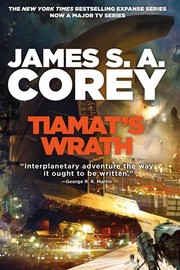
Others: Mostly positiveTiamat's Wrath is a science fiction novel by James S. A. Corey, the pen name of Daniel Abraham and Ty Franck, and the eighth book in their series The Expanse. Following the series' tradition of referring to ancient mythology in its titles, the book's title references the Babylonian goddess Tiamat who took part in the creation of the universe.
What made the match, strongest first
Peter Watts
2006 · 366 pages · 12 reviews
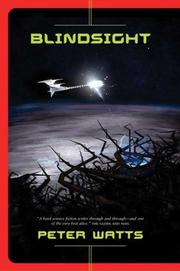
Others: Overwhelmingly positiveTwo months since the stars fell... Two months since sixty-five thousand alien objects clenched around the Earth like a luminous fist, screaming to the heavens as the atmosphere burned them to ash. Two months since that moment of brief, bright surveillance by agents unknown. Two months of silence while a world holds its breath. Now some half-derelict space probe, sparking fitfully past Neptune's orbit, hears a whisper from the edge of the solar system: a faint signal sweeping the cosmos like a lighthouse beam. Whatever's out there isn't talking to us. It's talking to some distant star, perhaps. Or perhaps to something closer, something en route. So who do you send to force introductions on an intelligence with motives unknown, maybe unknowable? Who do you send to meet the alien when the alien doesn't want to meet? You send a linguist with multiple personalities, her brain surgically partitioned into separate, sentient processing cores. You send a biologist so radically interfaced with machinery that he sees X-rays and tastes ultrasound, so compromised by grafts and splices that he no longer feels his own flesh. You send a pacifist warrior in the faint hope she won't be needed, and a fainter hope that she'll do any good if she is needed. You send a monster to command them all, an extinct hominid predator once called "vampire," recalled from the grave with the voodoo of recombinant genetics and the blood of sociopaths. And you send a synthesist—an informational topologist with half his mind gone—as an interface between here and there, a conduit through which the Dead Center might hope to understand the Bleeding Edge. You send them all to the edge of interstellar space, praying you can trust such freaks and retrofits with the fate of a world. You fear they may be more alien than the thing they've been sent to find. But you'd give anything for that to be true, if you only knew what was waiting for them....
What made the match, strongest first
Greg Bear
1985 · 262 pages · 7 reviews
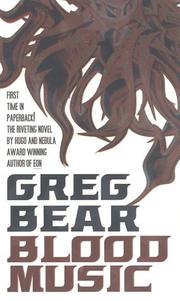
Others: Overwhelmingly positiveIn the tradition of the greatest cyberpunk novels, Blood Music explores the imminent destruction of mankind and the fear of mass destruction by technological advancements. The novel follows present-day events in which the fears concerning the nuclear annihilation of the world subsided after the Cold War and the fear of chemical warfare spilled over into the empty void it left behind. An amazing breakthrough in genetic engineering made by Vergil Ulam is considered too dangerous for further research, but rather than destroy his work, he injects himself with his creation and walks out of his lab, unaware of just how his actions will change the world. Author Greg Bear’s treatment of the traditional tale of scientific hubris is both suspenseful and a compelling portrait of a new intelligence emerging amongst us, irrevocably changing our world.
What made the match, strongest first
Clifford D. Simak
1951 · 254 pages · 1 review
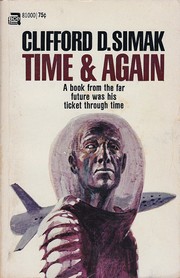
Others: PositiveIt is the future and Mankind has spread to the stars like seeds before the wind. One star system, though, shrouded in mystery, has defied Man's every attempt to visit it. Every expedition to 61 Cygni has found its path inexplicably deflected and has been forced to return home in frustration. In desperation, special agent Asher Sutton was sent on a solo mission, but unlike the others he did not return and 61 Cygni was quietly forgotten. As the book begins, twenty years have passed and, against all odds, Asher Sutton has returned. The mystery only deepens when it is discovered that Asher's ship was damaged many years ago in a crash that left it completely disabled and ought to have killed its sole passenger. The conclusion becomes inescapable; Asher Sutton died but now he's back. As the story develops, we discover Asher is not alone and it's not clear that he's even entirely human. But most importantly, Asher returns bearing an idea that will shake Mankind's beliefs to their foundations. In Time and Again, Mankind is spread thin across the stars and to help hold the frontier he has created biological androids. Created in the lab by chemical means, androids are sterile and cannot reproduce but in all other respects are as human as their creators. None the less, androids are treated as property and bear a mark on their foreheads to distinguish them from "true" humans. Androids dream of one day being acknowledged and treated as the equals of the "humans" and Asher's idea is the key for which they have been searching. Asher soon becomes the center of a struggle between three groups; humans of the present who fear any new idea that might loosen Mankind's tenuous grip on the stars, humans of the future who, via time travel, are waging a quiet war to alter the past to maintain the current status quo, and the androids of the future who struggle to let Asher's idea be born.
What made the match, strongest first
Cixin Liu
2010 · 614 pages · 3 reviews
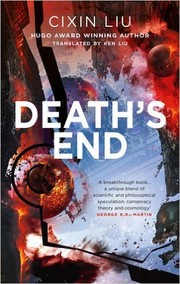
Others: PositiveSoon to be a Netflix Original Series! “The War of the Worlds for the 21st century… packed with a sense of wonder.” – Wall Street Journal The New York Times bestselling conclusion to a tour de force near-future adventure trilogy from China's bestselling and beloved science fiction writer. With The Three-Body Problem, English-speaking readers got their first chance to read China's most beloved science fiction author, Cixin Liu. The Three-Body Problem was released to great acclaim including coverage in The New York Times and The Wall Street Journal and reading list picks by Barack Obama and Mark Zuckerberg. It was also won the Hugo and Nebula Awards, making it the first translated novel to win a major SF award. Now this epic trilogy concludes with Death's End. Half a century after the Doomsday Battle, the uneasy balance of Dark Forest Deterrence keeps the Trisolaran invaders at bay. Earth enjoys unprecedented prosperity due to the infusion of Trisolaran knowledge. With human science advancing daily and the Trisolarans adopting Earth culture, it seems that the two civilizations will soon be able to co-exist peacefully as equals without the terrible threat of mutually assured annihilation. But the peace has also made humanity complacent. Cheng Xin, an aerospace engineer from the early twenty-first century, awakens from hibernation in this new age. She brings with her knowledge of a long-forgotten program dating from the beginning of the Trisolar Crisis, and her very presence may upset the delicate balance between two worlds. Will humanity reach for the stars or die in its cradle?
What made the match, strongest first
Loved itexcellent lamb is two for two with me now I loved Solaris and I love the futurological Congress