

 Loved it
there were periods in the Middle where I felt like this was a little slow and a little dry which prevented it being from one my alltime favorite clar books but still a very good book
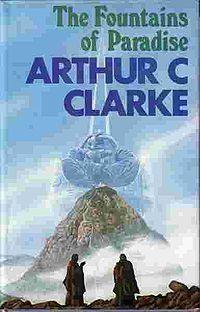
Others: Positive In the 22nd century visionary scientist Vannevar Morgan conceives the most grandiose engineering project of all time, and one which will revolutionize the future of humankind in space: a Space Elevator, 36,000 kilometers high, anchored to an equatorial island in the Indian Ocean.
Genres: science fiction
Lists: …
Robert Charles Wilson
2005 · 364 pages · 3 reviews
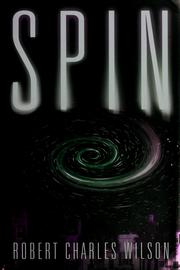
Others: Leaning positiveOne night in October when he was ten years old, Tyler Dupree stood in his back yard and watched the stars go out. They all flared into brilliance at once, then disappeared, replaced by a flat, empty black barrier. He and his best friends, Jason and Diane Lawton, had seen what became known as the Big Blackout. It would shape their lives. The effect is worldwide. The sun is now a featureless disk--a heat source, rather than an astronomical object. The moon is gone, but tides remain. Not only have the world's artificial satellites fallen out of orbit, their recovered remains are pitted and aged, as though they'd been in space far longer than their known lifespans. As Tyler, Jason, and Diane grow up, space probe reveals a bizarre truth: The barrier is artificial, generated by huge alien artifacts. Time is passing faster outside the barrier than inside--more than a hundred million years per day on Earth. At this rate, the death throes of the sun are only about forty years in our future. Jason, now a promising young scientist, devotes his life to working against this slow-moving apocalypse. Diane throws herself into hedonism, marrying a sinister cult leader who's forged a new religion out of the fears of the masses. Earth sends terraforming machines to Mars to let the onrush of time do its work, turning the planet green. Next they send humans...and immediately get back an emissary with thousands of years of stories to tell about the settling of Mars. Then Earth's probes reveal that an identical barrier has appeared around Mars. Jason, desperate, seeds near space with self-replicating machines that will scatter copies of themselves outward from the sun--and report back on what they find. Life on Earth is about to get much, much stranger.
What made the match, strongest first
Arthur C. Clarke
1968 · 228 pages · 5 reviews
 Others: Overwhelmingly positive
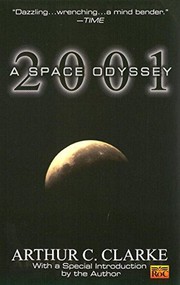
A novel that proposes an idea about how the human race might have begun and where it might be headed...given a little help from out there. A colaboration of ideas with director Stanley Kubrick in the late 1960's it begins at "the dawn of man" and then leaps to the year 2001 where a mission to Saturn (Jupiter in the film) is mounted to try and answer questions raised by the discovery of an ancient artifact dug up on the moon. Though not particularly fast paced, the science is good, and there are a few hair raising events. There are also interesting speculations about the future, such as the space shuttle, and a device eerily similar to an iPad. Leaving plenty of room for contemplation and the appreciation for the inevitable trials of space travel, this is one of the truly landmark pieces of hard science fiction.
What made the match, strongest first
Isaac Asimov
1955 · 192 pages · 2 reviews
 Others: Mixed
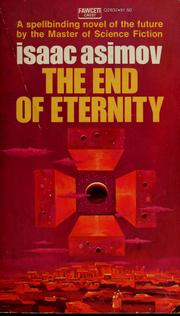
The story of temporal engineers who meta-regulate the history of humanity through the centuries, eliminating risk, adventure, and space travel in the process. One man rebels in order to save the existence of someone he loves, and in the end the time bureaucracy is destroyed for the sake of individuality and human achievement. The theme is the opposite of the Foundation stories, where the central planners and manipulators of humanity always dominate.
What made the match, strongest first
Philip K. Dick
1965 · 233 pages · 6 reviews
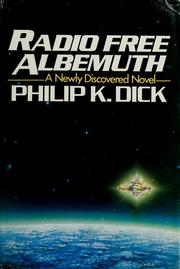
Others: Overwhelmingly positiveThe Three Stigmata of Palmer Eldritch is a 1965 science fiction novel by Philip K. Dick. It was nominated for the Nebula Award for Best Novel in 1965.[1] The novel takes place in 2016. Under United Nations authority, humankind has colonized every habitable planet and moon in the Solar System. Like many of Dick's novels, it utilizes an array of science fiction concepts, features several layers of reality and unreality and philosophical ideas. It is one of Dick's first works to explore religious themes.
What made the match, strongest first
Philip K. Dick
1985 · 286 pages · 4 reviews
Others: Overwhelmingly positiveScience fiction novel, a wild and visionary alternate history of the United States. It is 1969, and a paranoid president has convulsed America in a vicious war against imaginary internal enemies. As the country slides into fascism, a struggling science-fiction writer named Philip K. Dick is trying to keep from becoming one of that war's casualties. Meanwhile, Dick's best friend, a record executive named Nicholas Brady, is receiving transmissions from an extraterrestrial intelligence, which he dubs Valis, who apparently wants him to overthrow the president.
What made the match, strongest first
Stanisław Lem
1961 · 220 pages · 13 reviews
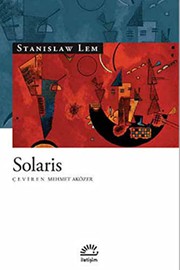
Others: Overwhelmingly positiveThe cult-classic by Stanislaw Lem that spawned the movie is now available for your Kindle! Until now the only English edition was a 1970 version, which was translated from French and which Lem himself described as a "poor translation." This wonderful new English translation (by Bill Johnston) of Lem's classic Solaris is a must-have for fans of Lem's classic novel. Telling of humanity's encounter with an alien intelligence on the planet Solaris, the 1961 novel is a cult classic, exploring the ultimate futility of attempting to communicate with extra-terrestrial life. When Kris Kelvin arrives at the planet Solaris to study the ocean that covers its surface, he finds a painful, hitherto unconscious memory embodied in the living physical likeness of a long-dead lover. Others examining the planet, Kelvin learns, are plagued with their own repressed and newly corporeal memories. The Solaris ocean may be a massive brain that creates these incarnate memories, though its purpose in doing so is unknown, forcing the scientists to shift the focus of their quest and wonder if they can truly understand the universe without first understanding what lies within their hearts.
What made the match, strongest first
Loved itthere were periods in the Middle where I felt like this was a little slow and a little dry which prevented it being from one my alltime favorite clar books but still a very good book