The Fabric of Civilization
The Fabric of CivilizationVirginia Postrel
Buy on Amazon

The Fabric of Civilization (2020)

Virginia Postrel

Others: Positive

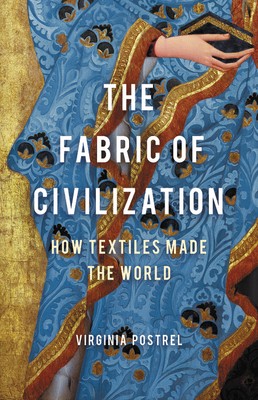
"The story of humanity is the story of textiles--as old as civilization itself. Textiles created empires and powered invention. They established trade routes and drew nations' borders. Since the first thread was spun, fabric has driven technology, business, politics, and culture. In The Fabric of Civilization, Virginia Postrel traces this surprising history, exposing the hidden ways textiles have made our world. The origins of chemistry lie in the coloring and finishing of cloth. The beginning of binary code--and perhaps all of mathematics--is found in weaving. Selective breeding to produce fibers heralded the birth of agriculture. The belt drive came from silk production. So did microbiology. The textile business funded the Italian Renaissance and the Mughal Empire; it left us double-entry bookkeeping and letters of credit, the David and the Taj Mahal. From the Minoans who exported woolen cloth colored with precious purple dye to Egypt, to the Romans who wore wildly expensive Chinese silk, the trade and production of textiles paved the economic and cultural crossroads of the ancient world. As much as spices or gold, the quest for fabrics and dyes drew sailors across strange seas, creating an ever-more connected global economy. Synthesizing groundbreaking research from economics, archaeology, and anthropology, Postrel weaves a rich tapestry of human cultural development"--

ISBN:
9781541617605
Length:
320 pages

Lists: …

Similar books

1 of 6
  • The Invention of Nature

    Andrea Wulf

    2015 · 473 pages · 1 review

    Others: Positive

    From the Prologue... When nature is perceived as a web, its vulnerability also becomes obvious. Everything hangs together. If one thread is pulled, the whole tapestry may unravel. After he saw the devastating environmental effects of colonial plantations at Lake Valencia in Venezuela in 1800, Humboldt became the first scientist to talk about harmful human-induced climate change. Deforestation there had made the land barren, water levels of the lake were falling and with the disappearance of brushwood torrential rains had washed away the soils on the surrounding mountain slopes. Humboldt was the first to explain the forest's ability to enrich the atmosphere with moisture and its cooling effect, as well as its importance for water retention and protection against soil erosion. He warned that humans were meddling with the climate and that this could have an unforeseeable impact on ‘future generations'. The Invention of Nature traces the invisible threads that connect us to this extraordinary man. Humboldt influenced many of the greatest thinkers, artists and scientists of his day. Thomas Jefferson called him ‘one of the greatest ornaments of the age'. Charles Darwin wrote that ‘nothing ever stimulated my zeal so much as reading Humboldt's Personal Narrative,' saying that he would not have boarded the Beagle, nor conceived of the Origin of Species, without Humboldt. William Wordsworth and Samuel Taylor Coleridge both incorporated Humboldt's concept of nature into their poems. And America's most revered nature writer, Henry David Thoreau, found in Humboldt's books an answer to his dilemma on how to be a poet and a naturalist – Walden would have been a very different book without Humboldt. Simón Bolívar, the revolutionary who liberated South America from Spanish colonial rule, called Humboldt the ‘discoverer of the New World' and Johann Wolfgang von Goethe, Germany's greatest poet, declared that spending a few days with Humboldt was like ‘having lived several years'.

    Why?

    What made the match, strongest first

    Kalanadi loved both
    64%
    Similar descriptions
    36%
    Personalize your recommendations
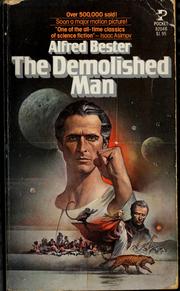
  • The Demolished Man

    Alfred Bester

    1951 · 208 pages · 6 reviews

    Others: Mostly positive

    In a world in which the police have telepathic powers, how do you get away with murder? Ben Reichs heads a huge 24th century business empire, spanning the solar system. He is also an obsessed, driven man determined to murder a rival. To avoid capture, in a society where murderers can be detected even before they commit their crime, is the greatest challenge of his life.

    Why?

    What made the match, strongest first

    Kalanadi loved both
    68%
    Similar descriptions
    32%
    Personalize your recommendations
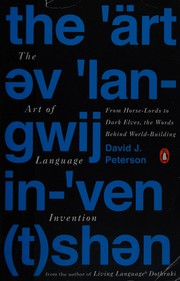
  • The art of language invention

    David J. Peterson

    2015 · 292 pages · 1 review

    Others: Positive

    "From master language creator David J. Peterson comes a creative guide to language construction for sci-fi and fantasy fans, writers, game creators, and language lovers. Peterson offers a captivating overview of language creation, covering its history from Tolkien's creations and Klingon to today's thriving global community of conlangers. He provides the essential tools necessary for inventing and evolving new languages, using examples from a variety of languages including his own creations, punctuated with references to everything from Star Wars to Michael Jackson. Along the way, behind-the-scenes stories lift the curtain on how he built languages like Dothraki for HBO's Game of Thrones and Shiväisith for Marvel's Thor: The Dark World, and an included phrasebook will start fans speaking Peterson's constructed languages. The Art of Language Invention is an inside look at a fascinating culture and an engaging entry into a flourishing art form--and it might be the most fun you'll ever have with linguistics." -- Publisher's description.

    Why?

    What made the match, strongest first

    Kalanadi loved both
    73%
    Similar descriptions
    27%
    Personalize your recommendations
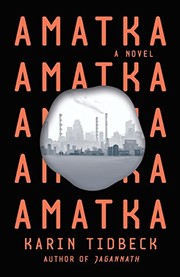
  • Amatka

    Karin Tidbeck

    2016 · 216 pages · 2 reviews

    Others: Positive

    "A surreal and shockingly original debut novel set in a dystopian world shaped by language--literally. Vanja, a government worker, leaves her home city of Essre for the austere, wintry colony of Amatka on a research assignment. It takes some adjusting: people act differently in Amatka, and citizens are monitored for signs of subversion. Intending to stay just a short while, Vanja finds herself falling in love with her housemate, Nina, and decides to stick around. But when she stumbles on evidence of a growing threat to the colony and a cover-up by its administration, she begins an investigation that puts her at tremendous risk. In Karin Tidbeck's dystopic imagining, language has the power to shape reality. Unless objects, buildings, and the surrounding landscape are repeatedly named, and named properly, everything will fall apart. Trapped in the repressive colony, Vanja dreams of using language to break free, but her individualism may well threaten the very fabric of reality. Amatka is a beguiling and wholly original novel about freedom, love, and artistic creation by an idiosyncratic new voice"--
    Why?

    What made the match, strongest first

    Kalanadi loved both
    73%
    Similar descriptions
    27%
    Personalize your recommendations
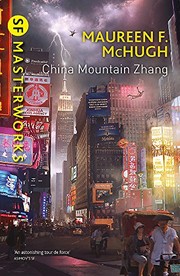
  • China Mountain Zhang

    Maureen F. McHugh

    1751 · 320 pages · 5 reviews

    Others: Overwhelmingly positive
    Winner of the James Tiptree, Jr. Memorial Award, the Lambda Literary Award, the Locus Award for Best First Novel, and a Hugo and Nebula Award nominee. With this groundbreaking novel, Maureen F. McHugh established herself as one of the decade's best science fiction writers. In its pages, we enter a postrevolution America, moving from the hyperurbanized eastern seaboard to the Arctic bleakness of Baffin Island; from the new Imperial City to an agricultural commune on Mars. The overlapping lives of cyberkite fliers, lonely colonists, illicit neural-pressball players, and organic engineers blend into a powerful, taut story of a young man's journey of discovery. This is a macroscopic world of microscopic intensity, one of the most brilliant visions of modern SF.

    Why?

    What made the match, strongest first

    Kalanadi loved both
    76%
    Similar descriptions
    24%
    Personalize your recommendations
  • Exhalation

    Ted Chiang

    2014 · 368 pages · 7 reviews

    Others: Overwhelmingly positive

    NATIONAL BESTSELLER • ONE OF THE NEW YORK TIMES BEST BOOKS OF THE YEAR • Nine stunningly original, provocative, and poignant stories—two published for the very first time—all from the mind of the incomparable author of Stories of Your Life and Others Tackling some of humanity’s oldest questions along with new quandaries only he could imagine, these stories will change the way you think, feel, and see the world. They are Ted Chiang at his best: profound, sympathetic, revelatory. Ted Chiang tackles some of humanity’s oldest questions along with new quandaries only he could imagine. In “The Merchant and the Alchemist’s Gate,” a portal through time forces a fabric seller in ancient Baghdad to grapple with past mistakes and second chances. In “Exhalation,” an alien scientist makes a shocking discovery with ramifications that are literally universal. In “Anxiety Is the Dizziness of Freedom,” the ability to glimpse into alternate universes necessitates a radically new examination of the concepts of choice and free will.

    Why?

    What made the match, strongest first

    Kalanadi loved both
    76%
    Similar descriptions
    24%
    Personalize your recommendations

Reviews1

Kalanadi
Loved it

So this is a fantastic book that really dives into how textiles drove innovation in technology just in general. We tend to think of textiles as just sort of this industrial thing on the side these days but the fact is that it was pretty much a foundation of all civilizations until very recently and I loved how Postrel framed this rather than just diving into individual types of textiles and like the civilization that they're most highly associated with like linen and Egypt and silk and China and wool in England.