
 Loved it
it's a brilliant one it's story about the family it's story about parents choices and how they affect family life but it's also the story of resistance
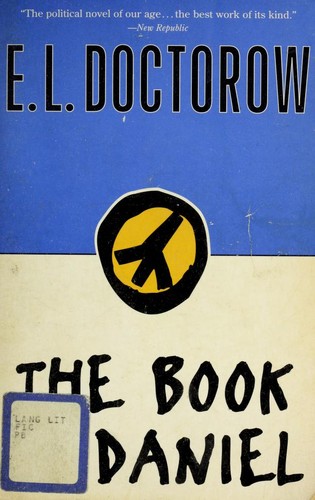
Others: Positive The Book of Daniel is a semi-historical novel loosely based on the lives, trial and execution of Julius and Ethel Rosenberg. Doctorow tells the story of Paul and Rochelle Isaacson (corollaries to the Rosenbergs) through the persons of their older son, Daniel, and his sister, Susan, who are college students deeply involved in 1960s politics. The presentation constantly shifts through backflashes as Daniel faces his [and his sister's] inability to honestly tell his life story. While there are some crude descriptions/language in places, the novel as a whole is historically informative and instructive and socially thought provoking.
Lists: …
Julian Barnes
2018 · 253 pages · 2 reviews
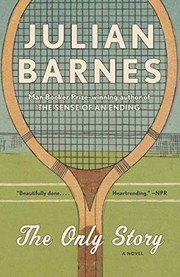
Others: Positive"From the Man Booker Prize-winning author of The Sense of an Ending, a novel about a young man on the cusp of adulthood and a woman who is already there, a love story shot through with sheer beauty, profound sadness, and deep truth. Most of us have only one story to tell. I don't mean that only one thing happens to us in our lives: there are countless events, which we turn into countless stories. But there's only one that matters, only one finally worth telling. This is mine. One summer in the sixties, in a staid suburb south of London, Paul comes home from university, aged nineteen, and is urged by his mother to join the tennis club. In the mixed-doubles tournament he's partnered with Susan Mcleod, a fine player who's forty-eight, confident, ironic, and married, with two nearly adult daughters. She is also a warm companion, their bond immediate. And they soon, inevitably, are lovers. Clinging to each other as though their lives depend on it, they then set up house in London to escape his parents and the abusive Mr. Mcleod. Decades later, with Susan now dead, Paul looks back at how they fell in love, how he freed her from a sterile marriage, and how -- gradually, relentlessly -- everything falling apart, as she succumbed to depression and worse while he struggled to understand the intricacy and depth of the human heart. It's a piercing account of helpless devotion, and of how memory can confound us and fail us and surprise us (sometimes all at once), of how, as Paul puts it, "first love fixes a life forever"--
What made the match, strongest first
Yanis Varoufakis
2017 · 217 pages · 2 reviews
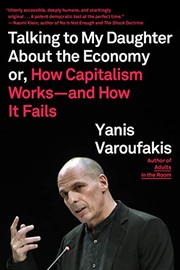
Others: PositiveIn Talking to My Daughter About the Economy, activist Yanis Varoufakis, Greece's former finance minister and the author of the international bestseller Adults in the Room, pens a series of letters to his young daughter, educating her about the business, politics, and corruption of world economics. Yanis Varoufakis has appeared before heads of nations, assemblies of experts, and countless students around the world. Now, he faces his most important and difficult audience yet. Using clear language and vivid examples, Varoufakis offers a series of letters to his young daughter about the economy: how it operates, where it came from, how it benefits some while impoverishing others. Taking bankers and politicians to task, he explains the historical origins of inequality among and within nations, questions the pervasive notion that everything has its price, and shows why economic instability is a chronic risk. Finally, he discusses the inability of market-driven policies to address the rapidly declining health of the planet his daughters generation stands to inherit. Throughout, Varoufakis wears his expertise lightly. He writes as a parent whose aim is to instruct his daughter on the fundamental questions of our age and through that knowledge, to equip her against the failures and obfuscations of our current system and point the way toward a more democratic alternative.
What made the match, strongest first
Walter Isaacson
2017 · 612 pages · 2 reviews
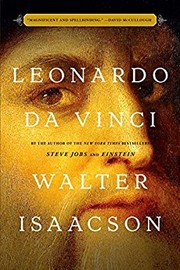
Others: PositiveThe author of the acclaimed bestsellers Steve Jobs, Einstein, and Benjamin Franklin brings Leonardo da Vinci to life in this exciting new biography. Based on thousands of pages from Leonardo’s astonishing notebooks and new discoveries about his life and work, Walter Isaacson weaves a narrative that connects his art to his science. He shows how Leonardo’s genius was based on skills we can improve in ourselves, such as passionate curiosity, careful observation, and an imagination so playful that it flirted with fantasy. He produced the two most famous paintings in history, The Last Supper and the Mona Lisa. But in his own mind, he was just as much a man of science and technology. With a passion that sometimes became obsessive, he pursued innovative studies of anatomy, fossils, birds, the heart, flying machines, botany, geology, and weaponry. His ability to stand at the crossroads of the humanities and the sciences, made iconic by his drawing of Vitruvian Man, made him history’s most creative genius. His creativity, like that of other great innovators, came from having wide-ranging passions. He peeled flesh off the faces of cadavers, drew the muscles that move the lips, and then painted history’s most memorable smile. He explored the math of optics, showed how light rays strike the cornea, and produced illusions of changing perspectives in The Last Supper. Isaacson also describes how Leonardo’s lifelong enthusiasm for staging theatrical productions informed his paintings and inventions. Leonardo’s delight at combining diverse passions remains the ultimate recipe for creativity. So, too, does his ease at being a bit of a misfit: illegitimate, gay, vegetarian, left-handed, easily distracted, and at times heretical. His life should remind us of the importance of instilling, both in ourselves and our children, not just received knowledge but a willingness to question it—to be imaginative and, like talented misfits and rebels in any era, to think different.
What made the match, strongest first
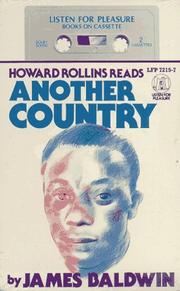
James Baldwin
1962 · 366 pages · 4 reviews
 Others: Overwhelmingly positive
Published in 1962, this is an emotionally intense novel of love, hatred, race and liberal America in the 1960s. Set in Greenwhich Village, Harlem and France, ANOTHER COUNTRY tells the story of the suicide of jazz-musician Rufus Scott and the friends who search for an understanding of his life and death, discovering uncomfortable truths about themselves along the way.
What made the match, strongest first
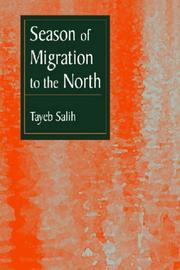
Tayeb Salih
1969 · 169 pages · 2 reviews
Others: Overwhelmingly positiveAfter years of study in Europe, the young narrator returns to his village along the Nile in the Sudan. It is the 1960s, and he is eager to make a contribution to the new postcolonial life of his country. Back home, he discovers a stranger among the familiar faces of childhood--the enigmatic Mustafa Sa'eed. Mustafa takes the young man into his confidence, telling him the story of his own years in London, of his brilliant career as an economist, and of the series of fraught and deadly relationships with European women that led to a terrible public reckoning and his return to his native land.
What made the match, strongest first
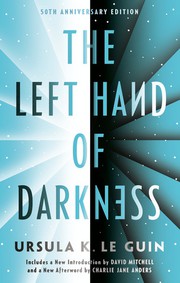
Ursula K. Le Guin
1969 · 304 pages · 13 reviews
Others: Mostly positiveComment by Kim Stanley Robinson, on The Guardian's website: The Left Hand of Darkness by Ursula K Le Guin (1969) One of my favorite novels is The Left Hand of Darkness, by Ursula K Le Guin. For more than 40 years I've been recommending this book to people who want to try science fiction for the first time, and it still serves very well for that. One of the things I like about it is how clearly it demonstrates that science fiction can have not only the usual virtues and pleasures of the novel, but also the startling and transformative power of the thought experiment. In this case, the thought experiment is quickly revealed: "The king was pregnant," the book tells us early on, and after that we learn more and more about this planet named Winter, stuck in an ice age, where the humans are most of the time neither male nor female, but with the potential to become either. The man from Earth investigating this situation has a lot to learn, and so do we; and we learn it in the course of a thrilling adventure story, including a great "crossing of the ice". Le Guin's language is clear and clean, and has within it both the anthropological mindset of her father Alfred Kroeber, and the poetry of stories as magical things that her mother Theodora Kroeber found in native American tales. This worldly wisdom applied to the romance of other planets, and to human nature at its deepest, is Le Guin's particular gift to us, and something science fiction will always be proud of. Try it and see – you will never think about people in quite the same way again.
What made the match, strongest first
Loved itit's a brilliant one it's story about the family it's story about parents choices and how they affect family life but it's also the story of resistance