

 Loved it
the more I think about it the more I believe it's a masterpiece it's truly among shon's best works
Others: Positive A man bears witness to his grandfather's deathbed confessions, which reveal his family's long-buried history and his involvement in a mail-order novelty company, World War II, and the space program.
Lists: …
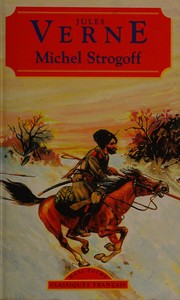
Jules Verne
1876 · 284 pages · 1 review
Others: PositiveWhile in the service of Alexander II, Michael Strogoff faces almost insurmountable obstacles as he carries a message from Moscow to Irkutsk during the time of a Tatar rebellion.
What made the match, strongest first
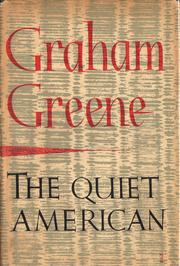
Graham Greene
1940 · 211 pages · 2 reviews
 Others: Overwhelmingly positive
One of Graham Greene's best works. The story is set at the time of the French war against the Viet Cong and tells the story of liberal British journalist Thomas Fowler, his mistress Phuong, and their relationship with American idealist Pyle. The latter is an earnest young man indocrinated with geo-political theory and whose attempts to shape the world to American ideals ends in his own personal tragedy and drastically alters the lives of the other two participants. Written before the US involvement in Vietnam this is a strangely prophetic work and seriously encapsulates the British viewpoint towards that conflict. A beautifully written book and highly recommended.
What made the match, strongest first
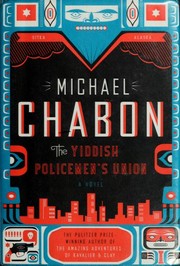
Michael Chabon
2006 · 425 pages · 4 reviews
Others: Leaning positiveThe Yiddish Policemen's Union is a 2007 novel by American author Michael Chabon. The novel is a detective story set in an alternative history version of the present day, based on the premise that during World War II, a temporary settlement for Jewish refugees was established in Sitka, Alaska, in 1941, and that the fledgling State of Israel was destroyed in 1948. The novel is set in Sitka, which it depicts as a large, Yiddish-speaking metropolis. The Yiddish Policemen's Union won a number of science fiction awards: the Nebula Award for Best Novel, the Locus Award for Best SF Novel, the Hugo Award for Best Novel, and the Sidewise Award for Alternate History for Best Novel. It was shortlisted for the British Science Fiction Association Award for Best Novel and the Edgar Allan Poe Award for Best Novel.
What made the match, strongest first
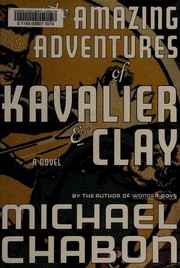
Michael Chabon
1957 · 639 pages · 1 review
Others: PositiveThe novel begins in 1939 with the arrival of 19-year-old Josef "Joe" Kavalier as a refugee in New York City, where he comes to live with his 17-year-old cousin Sammy Klayman. Joe escaped from Prague with the help of his teacher Kornblum by hiding in a coffin along with the inanimate Golem of Prague, leaving the rest of his family, including his younger brother Thomas, behind. Besides having a shared interest in drawing, Sammy and Joe share several connections to Jewish stage magician Harry Houdini: Joe (like comics legend Jim Steranko) studied magic and escapology in Prague, which aided him in his departure from Europe, and Sammy is the son of the Mighty Molecule, a strongman on the vaudeville circuit. When Sammy discovers Joe's artistic talent, Sammy gets Joe a job as an illustrator for a novelty products company, which, due to the recent success of Superman, is attempting to get into the comic-book business. Under the name "Sam Clay", Sammy starts writing adventure stories with Joe illustrating them, and the two recruit several other Brooklyn teenagers to produce Amazing Midget Radio Comics (named to promote one of the company's novelty items). The pair is at once passionate about their creation, optimistic about making money, and always nervous about the opinion of their employers. The magazine features Sammy and Joe's character the Escapist, an anti-fascist superhero who combines traits of (among others) Captain America, Harry Houdini, Batman, the Phantom, and the Scarlet Pimpernel. The Escapist becomes tremendously popular, but like talent behind Superman, the writers and artists of the comic get a minimal share of their publisher's revenue. Sammy and Joe are slow to realize that they are being exploited, as they have private concerns: Joe is trying to help his family escape from Nazi-occupied Prague, and has fallen in love with the bohemian Rosa Saks, who has her own artistic aspirations, while Clay is battling with his sexual identity and the lackluster progress of his literary career. For many months after coming to New York, Joe is driven almost solely by an intense desire to improve the condition of his family, still living under a regime increasingly hostile to their kind. This drive shows through in his work, which remains for a long time unabashedly anti-Nazi despite his employer's concerns. In the meantime, he is spending more and more time with Rosa, appearing as a magician in the bar mitzvahs of the children of Rosa's father's acquaintances, even though he sometimes feels guilty at indulging in these distractions from the primary task of fighting for his family. After multiple attempts and considerable monetary sacrifice, Joe ultimately fails to get his family to the States, his last attempt having resulted in putting his younger brother aboard a ship that sank into the Atlantic. Distraught and unaware that Rosa is pregnant with his child, Joe enlists in the navy, hoping to fight the Germans. Instead, he is sent to a lonely, cold naval base in Antarctica, from which he emerges the lone survivor after a series of deaths. When he makes it back to New York, ashamed to show his face again to Rosa and Sammy, he lives and sleeps in a hideout in the Empire State Building, known only to a small circle of magician-friends. Meanwhile, Sam battles with his sexuality, shown mostly through his relationship with the radio voice of The Escapist, Tracy Bacon. Bacon's movie-star good-looks initially intimidate Clay, but they later fall in love. When Tracy is cast as The Escapist in the film version, he invites Clay to move to Hollywood with him, an offer that Clay accepts. But later, when Bacon and Clay go to a friend's beach house with several other gay men and couples, the company's private dinner is broken up by the local police as well as two off-duty FBI agents. All of the men are arrested, except for two who hid under the dinner table, one of whom is Clay. The FBI agents each claim one of the men and grant them their freedom in return for sexual favors. After this episode, Clay decides that he can't live with the constant threat of being arrested, ridiculed, and judged because of his sexuality. He does not go with Bacon to the West Coast. Some time after Joe leaves, Sammy marries Rosa and moves with her to the suburbs, where they raise her son Tommy in what outwardly appears to be a typical traditional nuclear family. Sammy and Rosa cannot hide all their secrets from Tommy, however, who manages to take private magic lessons in the Empire State Building from Joe for the better part of year without anyone else's knowledge. Tommy is instrumental in finally reuniting the Kavalier and Clay duo, which works with renewed enthusiasm to find a new creative direction for comics. Joe moves into Sammy and Rosa's house. Shortly afterwards, Sammy's homosexuality is revealed on public television. This further complicates the attempts of Rosa, Sammy, and Joe to reconstitute a family. Many events in the novel are based on the lives of actual comic-book creators including Jack Kirby (to whom the book is dedicated in the afterword), Stan Lee, Jerry Siegel, Joe Shuster, Joe Simon, Will Eisner, and Jim Steranko. Other historical figures play minor roles, including Salvador Dalí, Al Smith, Orson Welles, and Fredric Wertham. The novel's time span roughly mirrors that of the Golden Age of Comics itself, starting from shortly after the debut of Superman and concluding with the Kefauver Senate hearings, two events often used to demarcate the era.
What made the match, strongest first
Julian Barnes
1984 · 191 pages · 1 review
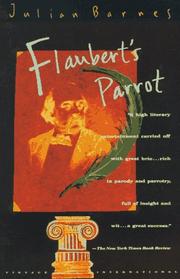
Others: PositiveAn intricate and delightful novel' Graham GreeneFlaubert's Parrot deals with Flaubert, parrots, bears and railways; with our sense of the past and our sense of abroad; with France and England, life and art, sex and death, George Sand and Louise Colet, aesthetics and redcurrant jam; and with its enigmatic narrator, a retired English doctor, whose life and secrets are slowly revealed.A compelling weave of fiction and imaginatively ordered fact, Flaubert's Parrot is by turns moving and entertaining, witty and scholarly, and a tour de force of seductive originality
What made the match, strongest first
Dave Eggers
2013 · 491 pages · 3 reviews
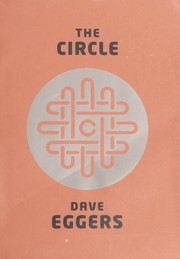
Others: Leaning positiveThe Circle is a 2013 dystopian novel written by American author Dave Eggers. The novel chronicles tech worker Mae Holland as she joins a powerful Internet company. Her initially rewarding experience turns darker.
What made the match, strongest first
Loved itthe more I think about it the more I believe it's a masterpiece it's truly among shon's best works