
 Loved it
This was one of the final anti-Trollope books I read. I read it back in January, and I was just so utterly emotionally invested in this book.
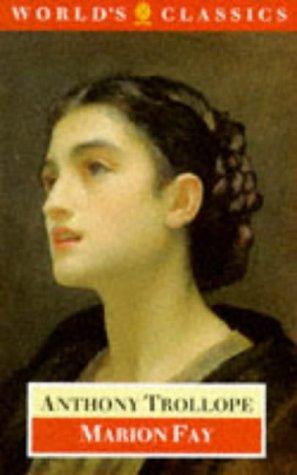
Others: Positive The novel contrasts two love affairs, each involving an aristocrat and a commoner. Trollope vividly evokes the dull working lives, plain homes, blank streets, and limited horizons of the dwellers in Paradise Row, using them as an ironic choric commentary on the unattainable world of rank, wealth, and freedom, symbolized by life in the great country houses.
Lists: …
Anthony Trollope
1815 · 506 pages · 4 reviews
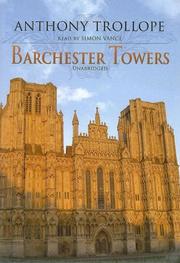
Others: PositiveThe Chronicles of Barsetshire, Book 2: Barchester Towers Written as a sequel to "The Warden", this is the second book of the Barsetshire novels. Described as humorous, this wonderful novel that interweaves power, love, greed, and deceit in Barchester. Barchester Towers (1857) is the second of the six Chronicles of Barsetshire, the work in which, after a ten-year apprenticeship, Trollope finally found his distinctive voice. In this his most popular novel, the chronicler continues the story of Mr. Harding and his daughter Eleanor, begun in The Warden, adding to his cast of characters that oily symbol of "progress" Mr. Slope, the hen-pecked Dr. Proudie, and the amiable and breezy Stanhope family. Love, mammon, clerical in-fighting, and promotion again figure prominently and comically, all centered on the magnificently imagined cathedral city of Barchester. The central questions of this moral comedy -- Who will be warden? Who will be dean? Who will marry Eleanor? -- are skilfully handled with the subtlety of ironic observation that has won Trollope such a wide and appreciative readership over the last 150 years. - Back cover.
What made the match, strongest first
Anthony Trollope
1864 · 605 pages · 7 reviews
Others: PositiveThe Chronicles of Barsetshire, Book 5: The Small House at Allington The Small House at Allington introduces Trollope's most charming heroine, the betwitching Lily Dale, onto the Barsetshire scene. She so endeared herself to readers of the Cornhill Magazine, where A Small House was first published in serial form, that Trollope was bombarded by letters begging him to marry her to her lifelong adorer Johnny Eames. Lily is the niece of Squire Dale, an embittered old bachelor entrenched in the "Great House" at Allington. His sister-in-law lives at the adjacent "Small House" with her two daughters Lily and Bell, and the action centers on the relations between the two houses and on the romantic entanglements of the two girls. We also meet Sir Raffle Buffle, the bullying head of a government department, the heartless Lady Dumbello, and the shallow Adolphus Crosbie, who gets his just deserts in the form of the frigid Lady Alexandrina de Courcy. Trollope's characteristic theme of the invasion of a pastoral, conservative world by brash and progressive forces from London gives him an opportunity in this novel for vivid, contrasting descriptions of gracious country living, with croquet and tea on the lawn, and of the cut and thrust of London life in the 1860s. - Back cover.
What made the match, strongest first
Evelyn Waugh
1934 · 269 pages · 2 reviews
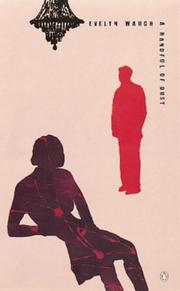
Others: PositiveTony Last is an aristocrat whose attachment to an ideal feudal past is so profound that he is blind to his wife Brenda's boredom with the stately rhythms of country life. She sets herself up in a London flat and pursues an affair with the social-climbing idler John Beaver. Tragedy forces the collapse of their relationship to accelerate, and Tony seeks solace in a foolhardy search for El Dorado.
What made the match, strongest first
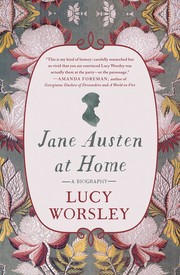
Lucy Worsley
2017 · 387 pages · 6 reviews
 Others: Overwhelmingly positive
""Jane Austen at Home offers a fascinating look at Jane Austen's world through the lens of the homes in which she lived and worked throughout her life. The result is a refreshingly unique perspective on Austen and her work and a beautifully nuanced exploration of gender, creativity, and domesticity." - Amanda Foreman, bestselling author of Georgianna, Duchess of Devonshire. On the eve of the two hundredth anniversary of Jane Austen's death, take a trip back to her world and the many places she lived as historian Lucy Worsley visits Austen's childhood home, her schools, her holiday accommodations, the houses - both grand and small - of the relations upon whom she was dependent, and the home she shared with her mother and sister towards the end of her life. In places like Steventon Parsonage, Godmersham Park, Chawton House and a small rented house in Winchester, Worsley discovers a Jane Austen very different from the one who famously lived a 'life without incident'. Worsley examines the rooms, spaces and possessions which mattered to her, and the varying ways in which homes are used in her novels as both places of pleasure and as prisons. She shows readers a passionate Jane Austen who fought for her freedom, a woman who had at least five marriage prospects, but - in the end - a woman who refused to settle for anything less than Mr. Darcy. Illustrated with two sections of color plates, Lucy Worsley's Jane Austen at Home is a richly entertaining and illuminating new book about one of the world's favorite novelists and one of the subjects she returned to over and over in her unforgettable novels: home"--|cProvided by publisher.
What made the match, strongest first
Agatha Christie
1933 · 252 pages · 1 review
Others: PositivePoirot had been present when Jane bragged of her plan to 'get rid of' her estranged husband. Now the monstrous man was dead, but how could Jane have stabbed Lord Edgware to death in his library at exactly the same time she was seen dining with friends? And what could be her motive now that the aristocrat had vinally granted her a divorce?
What made the match, strongest first
Anthony Powell
1951 · 277 pages · 2 reviews
Others: PositiveAnthony Powell’s universally acclaimed epic encompasses a four-volume panorama of twentieth century London. Hailed by Time as "brilliant literary comedy as well as a brilliant sketch of the times," A Dance to the Music of Time opens just after World War I. Amid the fever of the 1920s and the first chill of the 1930s, Nick Jenkins and his friends confront sex, society, business, and art. In the second volume they move to London in a whirl of marriage and adulteries, fashions and frivolities, personal triumphs and failures. These books "provide an unsurpassed picture, at once gay and melancholy, of social and artistic life in Britain between the wars" (Arthur Schlesinger, Jr.). The third volume follows Nick into army life and evokes London during the blitz. In the climactic final volume, England has won the war and must now count the losses. In this third volume of A Dance to the Music of Time, we again meet Widmerpool, doggedly rising in rank; Jenkins, shifted from one dismal army post to another; Stringham, heroically emerging from alcoholism; Templer, still on his eternal sexual quest. Here, too, we are introduced to Pamela Flitton, one of the most beautiful and dangerous women in modern fiction. Wickedly barbed in its wit, uncanny in its seismographic recording of human emotions and social currents, this saga stands as an unsurpassed rendering of England’s finest yet most costly hour.
What made the match, strongest first
Loved itThis was one of the final anti-Trollope books I read. I read it back in January, and I was just so utterly emotionally invested in this book.