
 Mixed
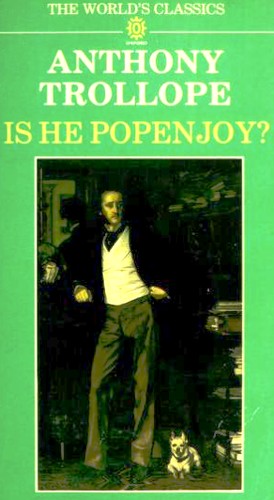
Basically, for the first three quarters of Is He Popenjoy? I was like this is my new favorite book, what an incredible novel. And then I found the final like third or quarter much less good.
Review 1 of 2
Others: Mixed After leaving the family estate to the management of his brother, the second son, Lord George Germain, the Dowager Marchioness and her daughters, the Marquis of Brotherton returned from Italy, in the company of an Italian woman and small child who, he said, were his wife and son, the heir Lord Popenjoy. Lord George had married Mary Lovelace, daughter of the Dean of Brotherton Cathedral. At his father-in-law's urging, Lord George investigated the small boy's legitimacy, but found no conclusive evidence for either claim. The boy and his mother soon returned to Italy, where the boy died, thus ending the claim. Soon after, the Marquis also died, and the title went to Lord George. A subplot in this story is Mary Germain's rebellion against her authoritarian husband, George. She is tempted by her worldly friend Adlaide, by the Dean of Brotherton, and by a dashing Guards captain. As she explores the issue, Mary meets various ardent advocates of the Women's Rights movement. Eventually, Mary produces a son, thus settling the estate.
Lists: …
Anthony Trollope
1858 · 524 pages · 3 reviews
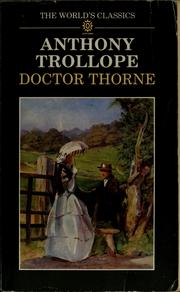
Others: MixedThe Chronicles of Barsetshire, Book 3: Dr. Thorne Mary Thorne, orphaned (and illegitimate) niece of Dr. Thorne, has long been a favorite at Greshamsbury House--until Lady Arabella Gresham learns that her only son Frank is in love with Mary. The unhappy Mary is banished forthwith, because the Gresham family fortunes are so depleted that Frank must marry money. Frank, however, is one of the few completely honorable young men in Trollope's novels and remains stubbornly true to his love. Well, he does propose to another woman, at the insistence of his mother, but only with the virtual certainty that he will be rejected--as indeed he is. The lady is Miss Dunstable, one of Trollope's most delightful characters, a fabulously wealthy thirtyish heiress of an ointment company. She is a bold, witty woman, not beautiful, but attractive in her way, whose wealth invites countless proposals. After the rather complicated plot unfolds, the tables are completely turned, and Mary is eagerly welcomed by Lady Arabella (who, of course, has always loved her) as the savior of the family.
What made the match, strongest first
Tiffany D. Jackson
2017 · 400 pages · 1 review
 Others: Positive
When Mary, a teenager living in a group home, becomes pregnant, authorities take another look at the crime for which Mary was convicted when she was nine years old.
Charles Dickens
1800 · 434 pages · 3 reviews
 Others: Negative
Oliver Twist; or, The Parish Boy's Progress, is the second novel by English author Charles Dickens. It was originally published as a serial from 1837 to 1839, and as a three-volume book in 1838. The story follows the titular orphan, who, after being raised in a workhouse, escapes to London, where he meets a gang of juvenile pickpockets led by the elderly criminal Fagin, discovers the secrets of his parentage, and reconnects with his remaining family. Oliver Twist unromantically portrays the sordid lives of criminals, and exposes the cruel treatment of the many orphans in London in the mid-19th century.[2] The alternative title, The Parish Boy's Progress, alludes to Bunyan's The Pilgrim's Progress, as well as the 18th-century caricature series by painter William Hogarth, A Rake's Progress and A Harlot's Progress. In an early example of the social novel, Dickens satirises child labour, domestic violence, the recruitment of children as criminals, and the presence of street children. The novel may have been inspired by the story of Robert Blincoe, an orphan whose account of working as a child labourer in a cotton mill was widely read in the 1830s. It is likely that Dickens's own experiences as a youth contributed as well, considering he spent two years of his life in the workhouse at the age of 12 and subsequently, missed out on some of his education.
What made the match, strongest first
Evelyn Waugh
1933 · 254 pages · 1 review
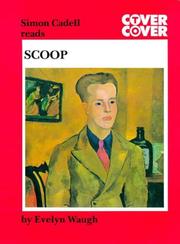
Others: NegativeLord Copper, newspaper magnate and proprietor of the Daily Beast, has always prided himself on his intuitive flair for spotting ace reporters. That is not to say he has not made the odd blunder, however, and may in a moment of weakness make another. Acting on a dinner party tip from Mrs. Algernon Stitch, Lord Copper feels convinced that he has hit on just the chap to cover a promising war in the African Republic of Ishmaelia. So begins Scoop, Waugh's exuberant comedy of mistaken identity and brilliantly irreverent satire of the hectic pursuit of hot news.
What made the match, strongest first
Ernest Hemingway
1950 · 308 pages · 1 review
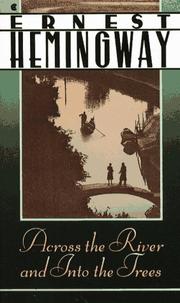
Others: PositiveThe story of Richard Cantwell, a war-ravaged American colonel stationed in Italy at the close of the Second World War, and his love for a young Italian countess.
Anthony Trollope
1848 · 473 pages · 2 reviews
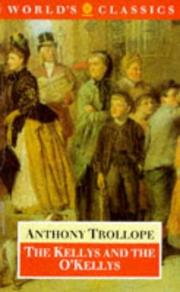
Others: NegativeDuring the first two months of the year 1844, the greatest possible excitement existed in Dublin respecting the State Trials, in which Mr O'Connell, his son, the Editors of three different repeal newspapers, Tom Steele, the Rev. Mr Tierney a priest who had taken a somewhat prominent part in the Repeal Movement and Mr Ray, the Secretary to the Repeal Association, were indicted for conspiracy. Those who only read of the proceedings in papers, which gave them as a mere portion of the news of the day, or learned what was going on in Dublin by chance conversation, can have no idea of the absorbing interest which the whole affair created in Ireland, but more especially in the metropolis.
What made the match, strongest first
MixedBasically, for the first three quarters of Is He Popenjoy? I was like this is my new favorite book, what an incredible novel. And then I found the final like third or quarter much less good.