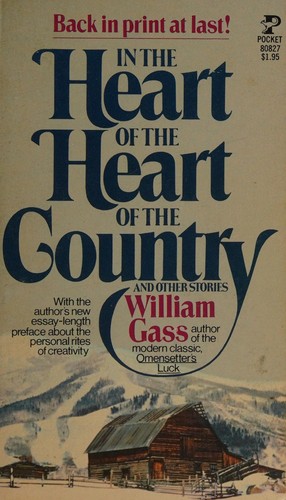
in the heart of the heart of the country
in the heart of the heart of the countrywilliam gass
Buy on Amazon

in the heart of the heart of the country (1977)

william gass

Others: Positive

IN THIS SUITE of five short pieces -- one of the unqualified literary masterpieces of the American 1960s -- William Gass finds five beautiful forms in which to explore the signature theme of his fiction: the solitary soul’s poignant, conflicted, and doomed pursuit of love and community. In their obsessions, Gass’s Midwestern dreamers are like the "grotesques" of Sherwood Anderson, but in their hyper-linguistic streams of consciousness, they are the match for Joyce’s Dubliners. First published in 1968, this book begins with a beguiling thirty-three page essay and has five fictions: the celebrated novella "The Pedersen Kid," "Mrs. Mean," "Icicles," "Order of Insects," and the title story.

ISBN:
9781111091095
Length:
226 pages

Genres: literary fiction, classics

Lists: …

Similar books

1 of 6
  • Bewitched Bourgeois

    Dino Buzzati

    2024 · 1 review

    Others: Positive

    Poe and Kafka meet The Twilight Zone in this anthology of fifty fantastical tales, many of them reflecting the political and social energies of the time, by an Italian master of the short story. Dino Buzzati was a prolific writer of stories, publishing several hundred over the course of forty years. Many of them are fantastic—reminiscent of Kafka and Poe in their mixture of horror and absurdity, and at the same time anticipating the alternate realities of The Twilight Zone or Black Mirror in their chilling commentary on the barbarities, catastrophes, and fanaticisms of the twentieth century. In The Bewitched Bourgeois, Lawrence Venuti has put together an anthology that showcases Buzzati’s short fiction from his earliest stories to the ones he wrote in the last months of his life. Some appear in English for the first time, while others are reappearing in Venuti’s crisp new versions, such as the much-anthologized “Seven Floors,” an absurdist tale of a patient fatally caught in hospital bureaucracy; “Panic at La Scala,” in which the Milanese bourgeoisie, fearing a left-wing revolution, find themselves imprisoned in the opera house; and “Appointment with Einstein,” where the physicist, stopping at a filling station in Princeton, New Jersey, encounters a gas station attendant who turns out to be the Angel of Death.

    Why?

    What made the match, strongest first

    On the same reading list
    79%
    Also classics and literary fiction
    20%
    Similar descriptions
    1%
    Personalize your recommendations
  • Blood on the forge

    William Attaway

    1941 · 279 pages · 1 review

    Others: Positive

    This brutally gripping novel about the African-American Great Migration follows the three Moss brothers, who flee the rural South to work in industries up North. Delivered by day into the searing inferno of the steel mills, by night they encounter a world of surreal devastation, crowded with dogfighters, whores, cripples, strikers, and scabs. Keenly sensitive to character, prophetic in its depiction of environmental degradation and globalized labor, Attaway's novel is an unprecedneted confrontation with the realities of American life, offering an apocalyptic vision of the melting pot not as an icon of hope but as an instrument of destruction.

    Why?

    What made the match, strongest first

    On the same reading list
    79%
    Also classics and literary fiction
    20%
    Similar descriptions
    1%
    Personalize your recommendations
  • Butcher's Crossing

    John Williams

    1960 · 274 pages · 1 review

    Others: Positive

    In the 1870s, Will Andrews, fired up by Emerson to seek "an original relation to nature," drops out of Harvard and heads west. He washes up in Butcher's Crossing, a small Kansas town full of restless men looking for ways to make money and ways to waste it. One of these men regales Will with tales of the immense buffalo herds hidden away in the Colorado Rockies and convinces him to join an expedition to track them down. At the end of a grueling journey, the men reach a place of paradisal richness, where they abandon themselves to an orgy of slaughter. So caught up in killing buffalo that they lose all sense of time, the men are overtaken by winter and snowed in. In the spring, half-insane with cabin fever, cold, and hunger, they stagger back to Butcher's Crossing to find a world as irremediably changed as they have been.

    Why?

    What made the match, strongest first

    Also classics and literary fiction
    51%
    On the same reading list
    40%
    Better Than Food loved both
    9%
    Personalize your recommendations
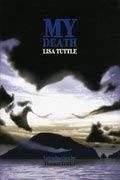
  • My Death

    Lisa Tuttle

    2004 · 144 pages · 4 reviews

    Others: Mostly positive

    A widowed writer begins to work on a biography of a novelist and artist—and soon uncovers bizarre parallels between her life and her subject’s—in this chilling and singularly strange novella by a contemporary master of horror and fantasy. The narrator of Lisa Tuttle’s uncanny novella is a recent widow, a writer adrift. Not only has she lost her husband, but her muse seems to have deserted her altogether. Her agent summons her to Edinburgh to discuss her next book. What will she tell him? At once the answer comes to she will write the biography of Helen Ralston, best known, if at all, as the subject of W.E. Logan’s much-reproduced painting Circe , and the inspiration for his classic children’s book. But Ralston was a novelist and artist in her own right, though her writing is no longer in print and her most storied painting too shocking, too powerful—malevolent even—to be shown in public. Over the months that follow, Ralston proves a reluctantly cooperative subject, even as her biographer uncovers eerie resonances between the older woman’s life and her own. Whose biography is she writing, really?

    Why?

    What made the match, strongest first

    On the same reading list
    96%
    Similar descriptions
    4%
    Personalize your recommendations
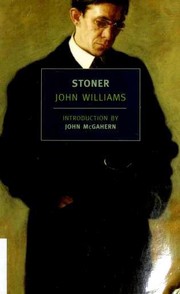
  • Stoner

    John Williams

    1965 · 278 pages · 6 reviews

    Others: Overwhelmingly positive

    William Stoner is born at the end of the nineteenth century into a dirt-poor Missouri farming family. Sent to the state university to study agronomy, he instead falls in love with English literature and embraces a scholar’s life, so different from the hardscrabble existence he has known. And yet as the years pass, Stoner encounters a succession of disappointments: marriage into a “proper” family estranges him from his parents; his career is stymied; his wife and daughter turn coldly away from him; a transforming experience of new love ends under threat of scandal. Driven ever deeper within himself, Stoner rediscovers the stoic silence of his forebears and confronts an essential solitude. John Williams’s luminous and deeply moving novel is a work of quiet perfection. William Stoner emerges from it not only as an archetypal American, but as an unlikely existential hero, standing, like a figure in a painting by Edward Hopper, in stark relief against an unforgiving world.

    Why?

    What made the match, strongest first

    Also classics and literary fiction
    53%
    On the same reading list
    34%
    Better Than Food loved both
    13%
    Personalize your recommendations
  • Dubliners

    James Joyce

    1914 · 250 pages · 1 review

    Others: Positive

    James Joyce's disillusion with the publication of Dubliners in 1914 was the result of ten years battling with publishers, resisting their demands to remove swear words, real place names and much else, including two entire stories. Although only 24 when he signed his first publishing contract for the book, Joyce already knew its worth: to alter it in any way would 'retard the course of civilisation in Ireland'. Joyce's aim was to tell the truth -- to create a work of art that would reflect life in Ireland at the turn of the last century. By rejecting euphemism, he would reveal to the Irish the unromantic reality, the recognition of which would lead to the spiritual liberation of the country. Each of the fifteen stories offers a glimpse of the lives of ordinary Dubliners -- a death, an encounter, an opportunity not taken, a memory rekindled -- and collectively they paint a portrait of a nation. - Back cover. Dubliners is a collection of vignettes of Dublin life at the end of the 19th Century written, by Joyce’s own admission, in a manner that captures some of the unhappiest moments of life. Some of the dominant themes include lost innocence, missed opportunities and an inability to escape one’s circumstances. Joyce’s intention in writing Dubliners, in his own words, was to write a chapter of the moral history of his country, and he chose Dublin for the scene because that city seemed to him to be the centre of paralysis. He tried to present the stories under four different aspects: childhood, adolescence, maturity and public life.\ ‘The Sisters’, ‘An Encounter’ and ‘Araby’ are stories from childhood. ‘Eveline’, ‘After the Race’, ‘Two Gallants’ and ‘The Boarding House’ are stories from adolescence. ‘A Little Cloud’, ‘Counterparts’, ‘Clay’ and ‘A Painful Case’ are all stories concerned with mature life. Stories from public life are ‘Ivy Day in the Committee Room’ and ‘A Mother and Grace’. ‘The Dead’ is the last story in the collection and probably Joyce’s greatest. It stands alone and, as the title would indicate, is concerned with death. Contains Sisters\ Encounter\ Araby\ Eveline\ After the Race\ Two Gallants\ Boarding House\ Little Cloud\ Counterparts\ Clay\ A Painful Case\ Ivy Day In the Committee Room\ Mother\ Grace\ Dead
    Why?

    What made the match, strongest first

    Also classics and literary fiction
    80%
    Similar descriptions
    20%
    Personalize your recommendations

Reviews1

Loved it

number four in the heart of the heart of the country by Will gas this book was sent to me for free by the publisher nyrb for review this is a collection of cold dark literary stories from the midwestern postmodernist author William gas an extremely aidite author with a writing style that seems to have been laboriously carved in the same manner that Landscapes are smoothed by water over thousands of years his combination of eerie unsettling narratives combined with his stunningly crafted Pros was a real highlight of the year