

 Loved it
I will keep this one it's very impressive how Richard Holloway writes about religions
Review 1 of 3
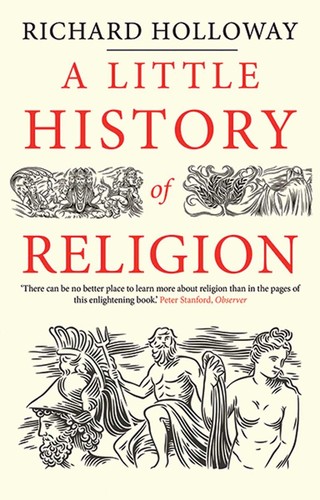
Others: Positive In an era of hardening religious attitudes and explosive religious violence, this book offers a welcome antidote. Richard Holloway retells the entire history of religionfrom the dawn of religious belief to the twenty-first centurywith deepest respect and a keen commitment to accuracy. Writing for those with faith and those without, and especially for young readers, he encourages curiosity and tolerance, accentuates nuance and mystery, and calmly restores a sense of the value of faith. Ranging far beyond the major world religions of Judaism, Islam, Christianity, Buddhism, and Hinduism, Holloway also examines where religious belief comes from, the search for meaning throughout history, todays fascinations with Scientology and creationism, religiously motivated violence, hostilities between religious people and secularists, and more. Holloway proves an empathic yet discerning guide to the enduring significance of faith and its power from ancient times to our own.--INSIDE FLAP.
Lists: …
Michael Moorcock
1968 · 152 pages · 2 reviews
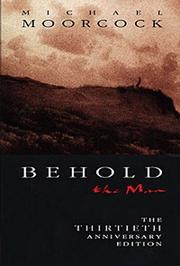
Others: PositiveKarl Glogauer is a disaffected modern professional casting about for meaning in a series of half-hearted relationships, a dead-end job, and a personal struggle. His questions of faith surrounding his father's run-of-the-mill Christianity and his mother's suppressed Judaism lead him to a bizarre obsession with the idea of the messiah. After the collapse of his latest affair and his introduction to a reclusive physics professor, Karl is given the opportunity to confront his obsession and take a journey that no man has taken before, and from which he knows he cannot return. Upon arriving in Palestine, A.D. 29, Glogauer finds that Jesus Christ is not the man that history and faith would like to believe, but that there is an opportunity for someone to change the course of history by making the ultimate sacrifice.
Åsne Seierstad
2018 · 444 pages · 2 reviews
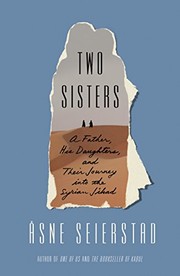
Others: PositiveThe riveting story of two sisters' journey to the Islamic State and the father who tries to bring them home. Asne Seierstad puts the problem of radicalization into painfully human terms, using instant messages and other primary sources to reconstruct a family's crisis from the inside. Eventually, she takes us into the hellscape of the Syrian civil war, as Sadiq risks his life in pursuit of his daughters, refusing to let them disappear into the maelstrom. This is a relentless thriller and a feat of reporting with profound lessons about belief, extremism, and the meaning of devotion.
What made the match, strongest first
Tim Whitmarsh
2016 · 304 pages · 1 review
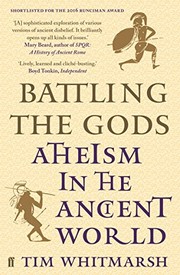
Others: PositiveHow new is atheism? Although adherents and opponents alike today present it as an invention of the European Enlightenment, when the forces of science and secularism broadly challenged those of faith, disbelief in the gods, in fact, originated in a far more remote past. In Battling the Gods, Tim Whitmarsh journeys into the ancient Mediterranean, a world almost unimaginably different from our own, to recover the stories and voices of those who first refused the divinities.Homer’s epic poems of human striving, journeying, and passion were ancient Greece’s only “sacred texts,” but no ancient Greek thought twice about questioning or mocking his stories of the gods. Priests were functionaries rather than sources of moral or cosmological wisdom. The absence of centralized religious authority made for an extraordinary variety of perspectives on sacred matters, from the devotional to the atheos, or “godless.” Whitmarsh explores this kaleidoscopic range of ideas about the gods, focusing on the colorful individuals who challenged their existence. Among these were some of the greatest ancient poets and philosophers and writers, as well as the less well known: Diagoras of Melos, perhaps the first self-professed atheist; Democritus, the first materialist; Socrates, executed for rejecting the gods of the Athenian state; Epicurus and his followers, who thought gods could not intervene in human affairs; the brilliantly mischievous satirist Lucian of Samosata.Before the revolutions of late antiquity, which saw the scriptural religions of Christianity and Islam enforced by imperial might, there were few constraints on belief. Everything changed, however, in the millennium between the appearance of the Homeric poems and Christianity’s establishment as Rome’s state religion in the fourth century AD. As successive Greco-Roman empires grew in size and complexity, and power was increasingly concentrated in central capitals, states sought to impose collective religious adherence, first to cults devoted to individual rulers, and ultimately to monotheism. In this new world, there was no room for outright disbelief: the label “atheist” was used now to demonize anyone who merely disagreed with the orthodoxy—and so it would remain for centuries.As the twenty-first century shapes up into a time of mass information, but also, paradoxically, of collective amnesia concerning the tangled histories of religions, Whitmarsh provides a bracing antidote to our assumptions about the roots of freethinking. By shining a light on atheism’s first thousand years, Battling the Gods offers a timely reminder that nonbelief has a wealth of tradition of its own, and, indeed, its own heroes. From the Hardcover edition.
Afua Hirsch
2018 · 384 pages · 2 reviews
Others: PositiveWhere are you really from? You're British. Your parents are British. You were raised in Britain. Your partner, your children and most of your friends are British. So why do people keep asking you where are from? Brit(ish) is about a search for identity. It is about the everyday racism that plagues British society. It is about our awkward, troubled relationship with our history. It is about why liberal attempts to be 'colour-blind' have caused more problems than they have solved. It is about why we continue to avoid talking about race. In this personal and provocative investigation, Afua Hirsch explores a very British crisis of identity. We are a nation in denial about our past and our present. We believe we are the nation of abolition, but forget we are the nation of slavery. We are convinced that fairness is one of our values, but that immigration is one of our problems. Brit(ish) is the story of how and why this came to be, and an urgent call for change. -- Inside jacket flap.
What made the match, strongest first
J.M. Coetzee
1999 · 220 pages · 2 reviews
 Others: Overwhelmingly positive
At fifty-two, Professor David Lurie is divorced, filled with desire, but lacking in passion. An affair with one of his students leaves him jobless, shunned by his friends, and ridiculed by his ex-wife. He retreats to his daughter Lucy's isolated smallholding, where a brief visit becomes an extended stay as he tries to find meaning from the one remaining relationship. David attempts to relate to Lucy and to a society with new racial complexities are disrupted by an afternoon of violence that shakes all of his beliefs and threatens to destroy his daughter. In this wry, visceral, yet strangely tender novel, Coetzee once again tells "truths [that] cut to the bone" (The New York Times Book Review).
What made the match, strongest first
Shani Mootoo
1996 · 249 pages · 1 review
Others: PositiveSet on a fictional Caribbean island in the town of Paradise, this haunting and evocative debut novel unveils the mystery surrounding the aging Mala Ramchandin--a suspected murderess--and the tempestuous history of her family.
What made the match, strongest first
Loved itI will keep this one it's very impressive how Richard Holloway writes about religions