

 Loved it
it's a res Mission it's a survival story it's kind of tense add some cool hard SciFi in there to explain why it should be so tense and I think it works really well I had a fun time with this one
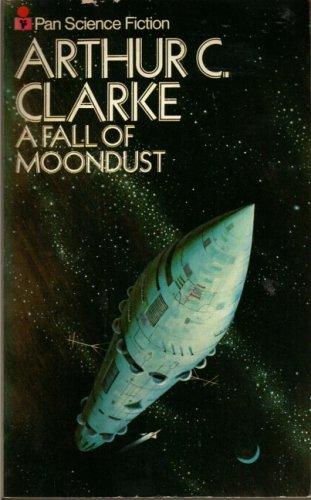
Others: Positive An early Arthur C. Clarke novel that takes place on the Moon. The setting is a future in which the Moon has become a tourist destination, and one of the attractions is a huge dust bowl on which one can sightsee from a "dust cruiser". Then there's a serious accident...... This is an excellent hard SF adventure.
Genres: science fiction
Lists: …
Arthur C. Clarke
1952 · 220 pages · 9 reviews
Others: Leaning positiveChildhood's End is a 1953 science fiction novel by British author Arthur C. Clarke. The story follows the peaceful alien invasion of Earth by the mysterious Overlords, whose arrival ends all war, helps form a world government, and turns the planet into a near-utopia. Many questions are asked about the origins and mission of the aliens, but they avoid answering, preferring to remain in their ships, governing through indirect rule. Decades later, the Overlords eventually show themselves, and their impact on human culture leads to a Golden Age. However, the last generation of children on Earth begin to display powerful psychic abilities, heralding their evolution into a group mind, a transcendent form of life.
What made the match, strongest first
Fritz Leiber
1964 · 318 pages · 5 reviews
 Others: Overwhelmingly negative
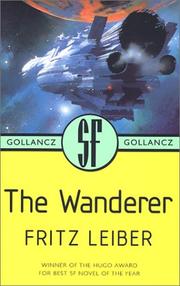
All eyes were watching the eclipse of the Moon when the Wanderer--a huge, garishly colored artificial world--emerged. Only a few scientists even suspected its presence, and then, suddenly and silently, it arrived, dwarfing and threatening the Moon and wreaking havoc on Earth's tides and weather. Though the Wanderer is stopping in the solar system only to refuel, its mere presence is catastrophic. A tense, thrilling, and towering achievement. Winner of the Hugo Award for Best SF Novel of the Year!
What made the match, strongest first
Arthur C. Clarke
1968 · 228 pages · 5 reviews
 Others: Overwhelmingly positive
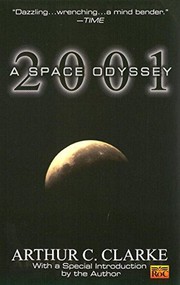
A novel that proposes an idea about how the human race might have begun and where it might be headed...given a little help from out there. A colaboration of ideas with director Stanley Kubrick in the late 1960's it begins at "the dawn of man" and then leaps to the year 2001 where a mission to Saturn (Jupiter in the film) is mounted to try and answer questions raised by the discovery of an ancient artifact dug up on the moon. Though not particularly fast paced, the science is good, and there are a few hair raising events. There are also interesting speculations about the future, such as the space shuttle, and a device eerily similar to an iPad. Leaving plenty of room for contemplation and the appreciation for the inevitable trials of space travel, this is one of the truly landmark pieces of hard science fiction.
What made the match, strongest first
Philip K. Dick
1965 · 233 pages · 6 reviews
Others: Overwhelmingly positiveThe Three Stigmata of Palmer Eldritch is a 1965 science fiction novel by Philip K. Dick. It was nominated for the Nebula Award for Best Novel in 1965.[1] The novel takes place in 2016. Under United Nations authority, humankind has colonized every habitable planet and moon in the Solar System. Like many of Dick's novels, it utilizes an array of science fiction concepts, features several layers of reality and unreality and philosophical ideas. It is one of Dick's first works to explore religious themes.
What made the match, strongest first
Robert J. Sawyer
2000 · 336 pages · 2 reviews
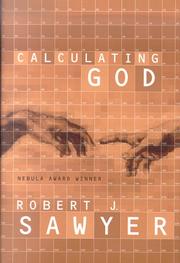
Others: Overwhelmingly positiveCalculating God is the new near-future SF thriller from the popular and award-winning Robert J. Sawyer. An alien shuttle craft lands outside the Royal Ontario Museum in Toronto. A six-legged, two-armed alien emerges, who says, in perfect English, "Take me to a paleontologist." It seems that Earth, and the alien's home planet, and the home planet of another alien species traveling on the alien mother ship, all experienced the same five cataclysmic events at about the same time (one example of these "cataclysmic events" would be the meteor that wiped out the dinosaurs). Both alien races believe this proves the existence of God: i.e. he's obviously been playing with the evolution of life on each of these planets. From this provocative launch point, Sawyer tells a fast-paced, and morally and intellectually challenging, SF story that just grows larger and larger in scope. The evidence of God's universal existence is not universally well received on Earth, nor even immediately believed. And it reveals nothing of God's nature. In fact. it poses more questions than it answers. When a supernova explodes out in the galaxy but close enough to wipe out life on all three home-worlds, the big question is, Will God intervene or is this the sixth cataclysm:? Calculating God is SF on the grand scale. Calculating God is a 2001 Hugo Award Nominee for Best Novel.
What made the match, strongest first
Ursula K. Le Guin
1971 · 184 pages · 3 reviews
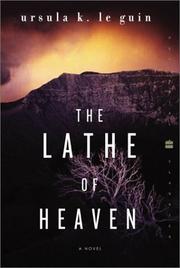
Others: Overwhelmingly positive“The Lathe of Heaven” ; 1971 ( Ursula Le Guin received the 1973 Locus Award for this story) George Orr has a gift – he is an effective dreamer: his dreams become reality when he wakes up. He is aware of his past and present, two or more sets of memories, although the people around him are only aware of the current reality. This science fiction story is set in Portland, Oregon, in/around the late 1990s - early 2000s. Orr begins to take drugs to suppress dreams but eventually he is sent to a psychotherapist, Dr. William Haber, who has developed an electronic machine, the Augmentor, which records the brain patterns of a person as they dream. When Haber realizes that he can use Orr's unique ability to change their world, the consequences are both beneficial and frightening, both locally and globally. Orr seeks out the help of a civil rights lawyer, Heather Lelache, who attends a treatment session, and sees Portland change before her very eyes as Orr awakens. In a strange turn of events, Heather helps Orr by putting him in a dream state where Orr can undo some of Haber's actions. The result – Aliens on the Moon land on Earth ! A special affinity exists between George Orr and the Aliens, who seem to understand his unique gift. Ultimately Haber decides to impose Orr's brain patterns on his own, so that he can bring about world-wide changes. Orr and Heather feel the chaos and a sense of a void as Haber dreams. Orr rushes back to Haber's office and turns off the Augmentor. The world returns to April 1998.
What made the match, strongest first
Loved itit's a res Mission it's a survival story it's kind of tense add some cool hard SciFi in there to explain why it should be so tense and I think it works really well I had a fun time with this one